
It has been several weeks since I deactivated or completely deleted several of my profiles on major social platforms, I must admit without any second thoughts: my Facebook page is deactivated, the contents are still there in case I should reactivate it (the personal profile was deactivated in 2022 with no regrets); Instagram profile deactivated; LinkedIn profile completely deleted; TikTok profile (yes, I had that too) permanently deleted with all its content. I deleted my Twitter profile as soon as the platform was acquired by Elon Musk and renamed X, with a horrific icon that, combined with the aggressiveness of the new owner and many users, convinced me to abandon it.
![Mio-sito-[ENG]](https://sebastianodessanay.com/wp-content/uploads/2026/09/Mio-sito-ENG-1024x668.jpg)
My online presence has not disappeared completely, however. This website continues to exist (and resist) and indeed, I intend to slowly make it the main keeper of my content and ideas, from which you can also subscribe to my Newsletter.
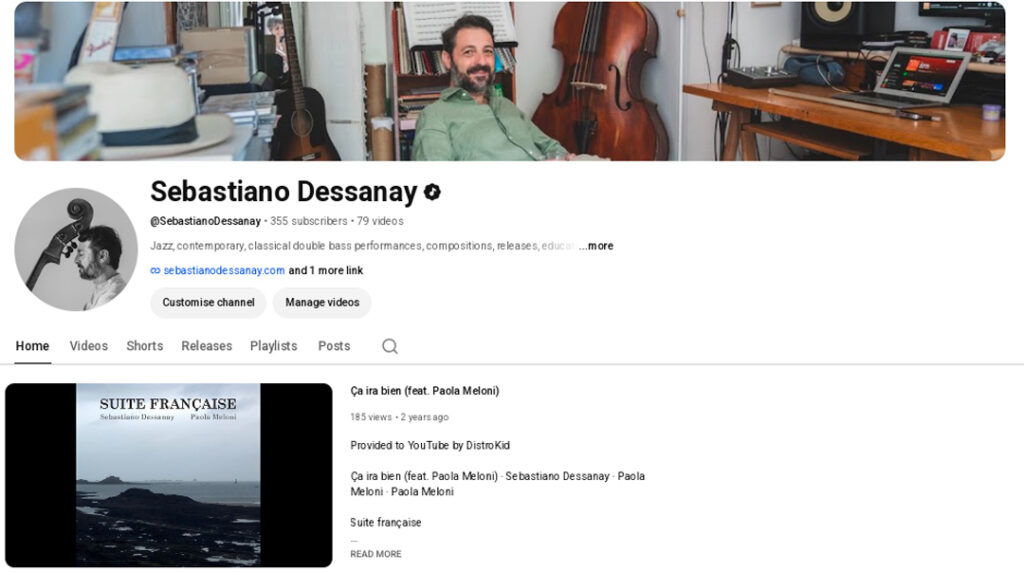
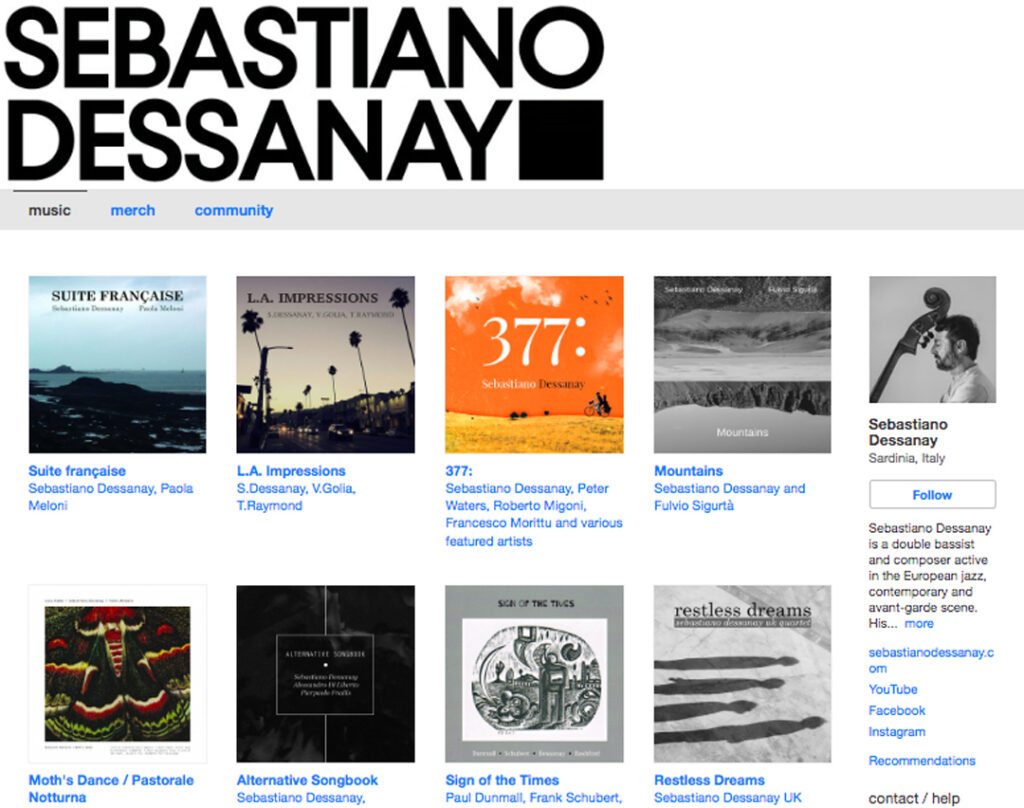
My YouTube profile remains, one of the few platforms where, amidst a multitude of content devoid of interest or quality, I can still find people sharing interesting material, that makes me think or learn something new. My Bandcamp profile remains for selling and listening to my music. And my profile on Spotify remains (not sure for how long though), a platform from which I occasionally contemplate withdrawing my music, who knows.
The main reasons that pushed me to make these decisions are various, some purely practical others related to the personal sphere, I won’t list them all. On Facebook is more and more difficult to read interesting arguments, and it has become the favorite place for “haters”; Instagram is the place to show only people, places, things in their splendor, only one face of the reality coin; on LinkedIn I have never found interesting job opportunities or suited to my professional profile, and no one has ever offered me any; TikTok… I just tried it but every time I opened it, it was like opening a garbage dumpster).
But one of the main reasons for abandoning these platforms is wanting to reclaim a bit of space and quality time and wanting to dedicate myself to some activities with greater depth.
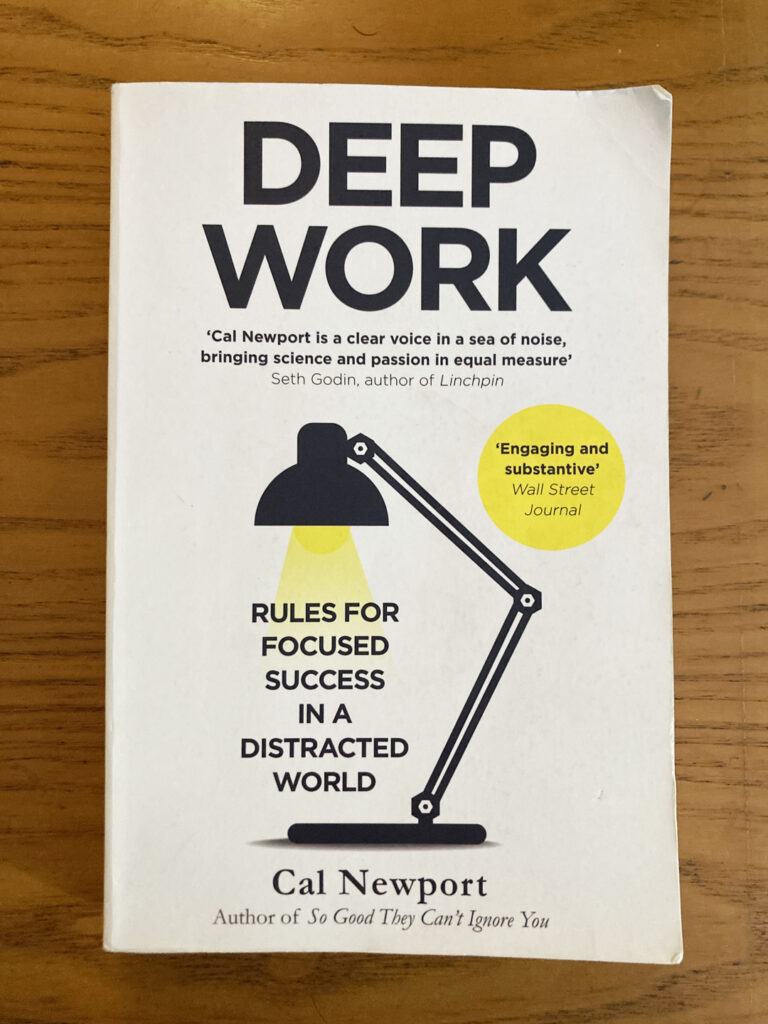
The recent re-reading of Deep Work by Cal Newport, a book designed for professionals, students, and creatives doing demanding cognitive tasks, made me reflect on the importance of being able to concentrate intensely without distractions, a skill that today seems almost the prerogative of a few. The core of Newport’s argument is this: time spent in “deep work” activities, meaning a concentration that some studies also call “flow”, creates new value, improves our qualities, and produces original and hard-to-replicate results.
Unfortunately, today the ability to perform “deep work” is becoming increasingly rare, and one of the causes is continuous distraction by computers, tablets, and cell phones through constant email checking, web browsing, endless scrolling on social platforms, what is defined as “shallow work”. The good news is that the few who still cultivate this attitude of putting themselves in conditions to perform “deep work” produce exceptional results, “so good they can’t ignore you” (the title of another Newport book). And the examples provided in the book are many: entrepreneurs, scientists, creatives, musicians, programmers.
Particularly interesting is the chapter titled Quit Social Media. Newport is not against social media a priori. His words invite reflection on whether what determines our success and happiness depends on social media. If the advantages of their use far outweigh the negative impact they can have on us (for example, the loss of large amounts of time, or the feeling of frustration or inadequacy caused by seeing the splendor, often false, of others’ lives), then you can safely continue to exploit them positively.
Newport also suggests the experiment of abandoning social media for thirty days, at the end of which ask yourself these two questions: 1) would the last thirty days have been better if I had used social media? 2) Did people care that I wasn’t using social media? If the answer is no to both questions, we can safely abandon social media.
This is what is happening to me. The weeks without social media have not only been more carefree, they haven’t harmed anyone, and above all suddenly free blocks of time have opened up for me which I have filled with various activities. One of these was reading, not the cheap content of social media, or opinions from Tom, Dick, and Harry or the public figure of the moment. I mean slow and immersive reading which, like listening to records, was slowly disappearing from my life, replaced by scrolling, reading pills of non-wisdom, or viewing unrequested images or videos (not to mention the advertising content present on social platforms that almost outnumber the rest of the content).
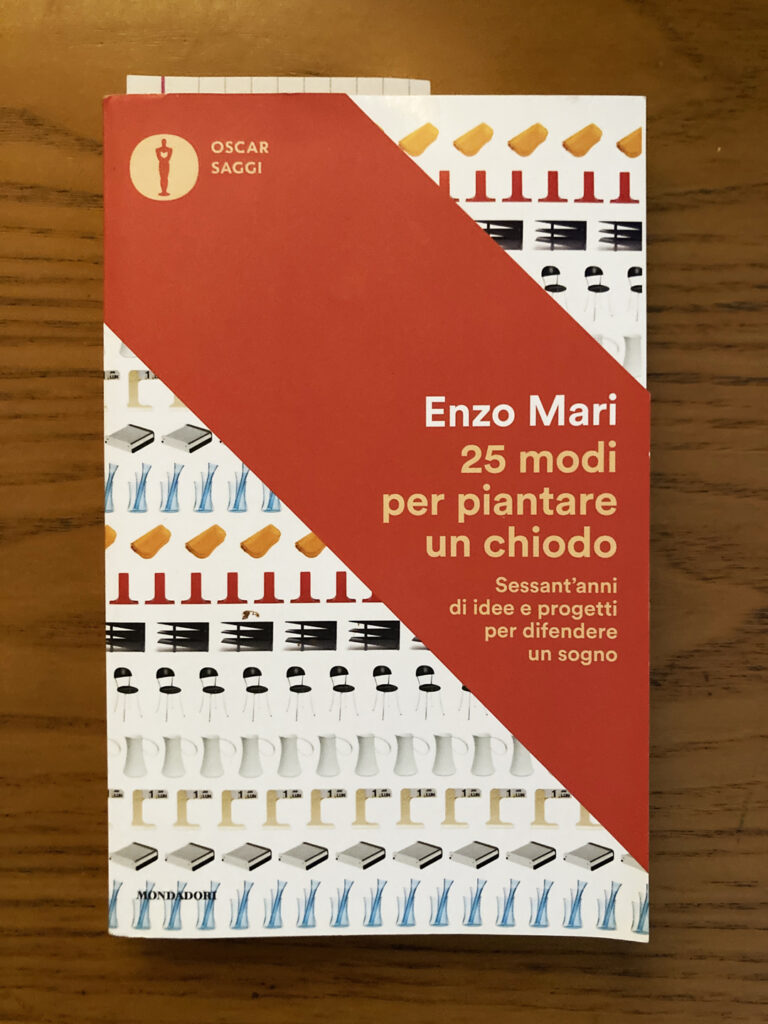
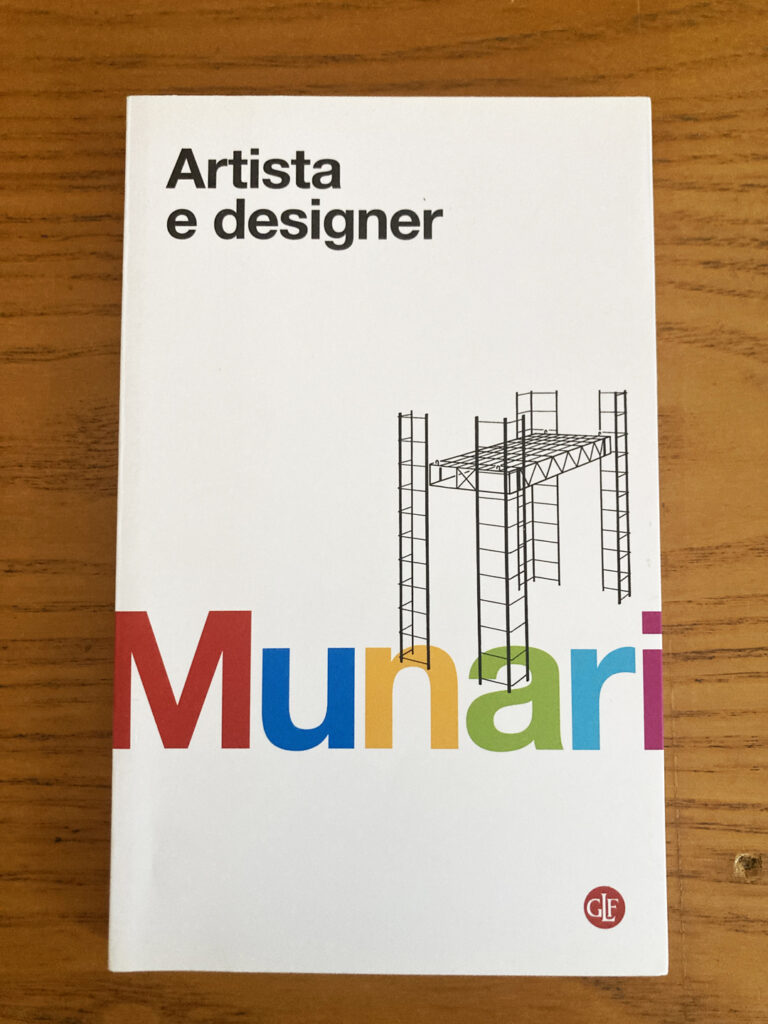
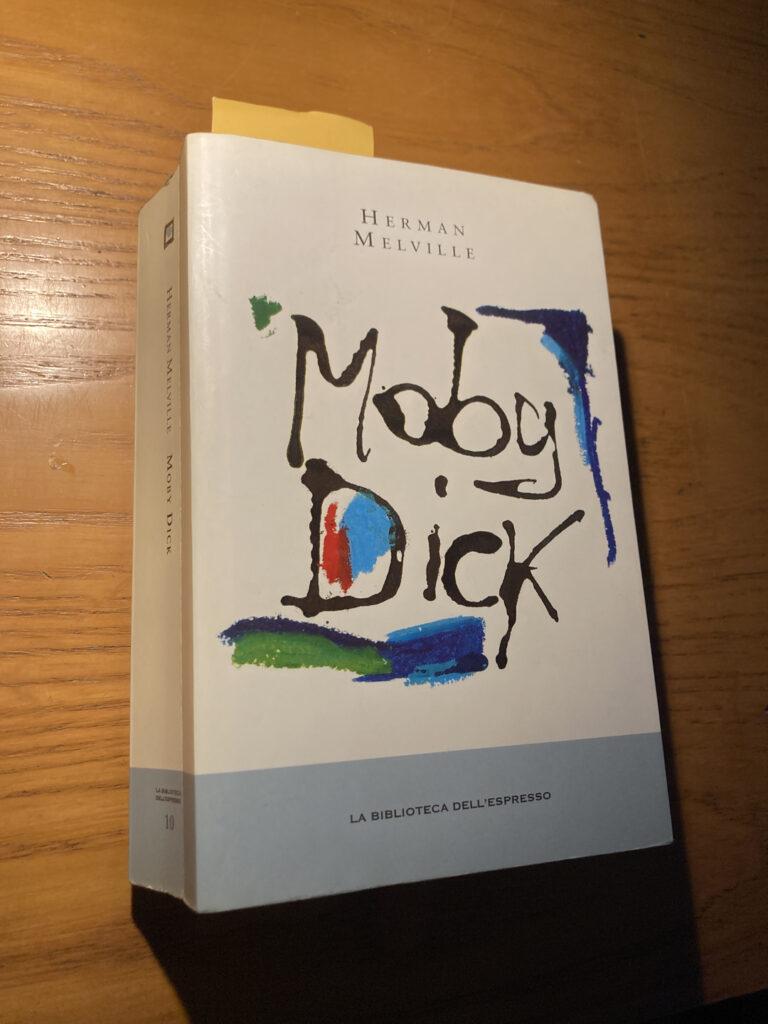
Too long to be ignored is the list of Classics I haven’t read. The thickness of the book always discouraged me, but with a clear mind I finally managed to start Moby Dick by Herman Melville. And after a few weeks I’ve already read almost half of it. Equally long is the list of intriguing essays I find on my shelves waiting to be read. In particular these two greats of the design world (but art in general): 25 ways to drive a nail by Enzo Mari is a book I would recommend to all creatives, as well as Artist and Designer by Bruno Munari from whom I would like all musicians to read these words:
“Any dictionary tells us that tradition is the sum of rules, uses, innovations, collected during man’s life and transmitted from generation to generation. Within tradition there are expiring rules and emerging rules. Tradition is alive when its contribution renews itself continuously. Repeating a past moment of tradition is not operating according to tradition. Tradition is made every day. There are therefore artists who repeat dead moments of tradition and artists who make tradition every day.”
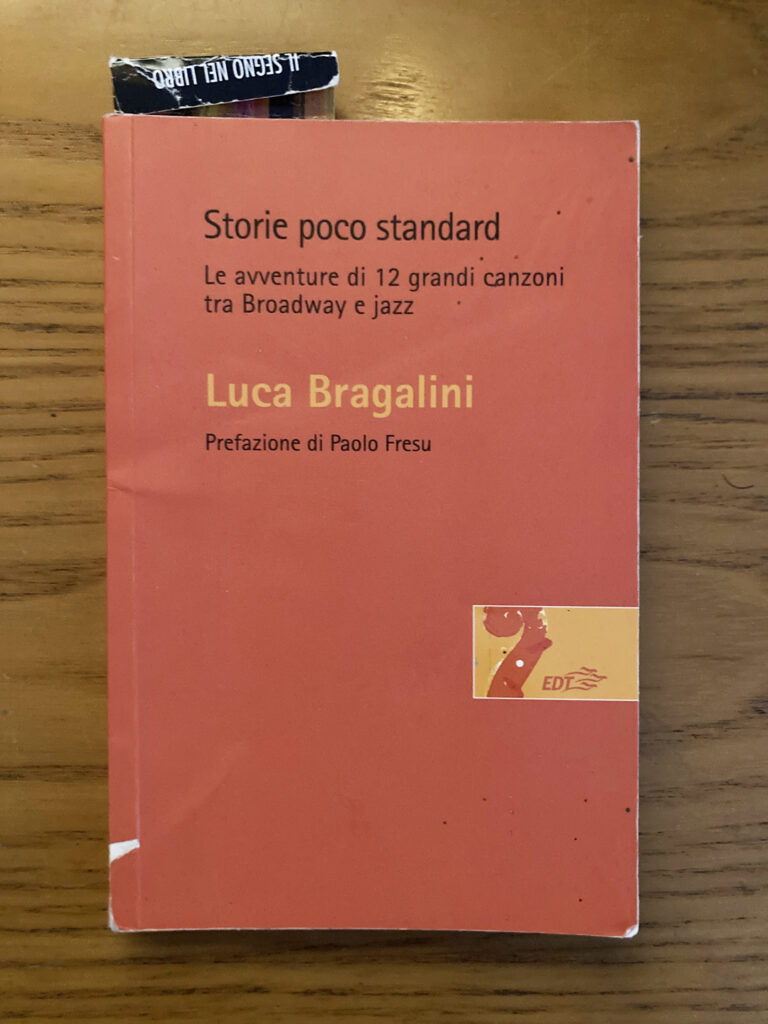
Equally long is the list of purely musical essays accumulating on my shelves. Storie poco standard by Luca Bragaglini (whom I remember with affection for his intriguing Jazz History lessons at the Nuoro Jazz seminars many years ago) confronts me with the accomplished fact “I know that I know nothing”. Does anyone know who Harold Arlen was? I, a jazz musician and composer, didn’t know him. However, I know very well his song discussed in this book, (Somewhere) Over the Rainbow, which probably everyone knows thanks to the old film The Wizard of Oz. I discover that Arlen wrote more than 500 songs, and I wonder if he would have written them in the age of social media too?
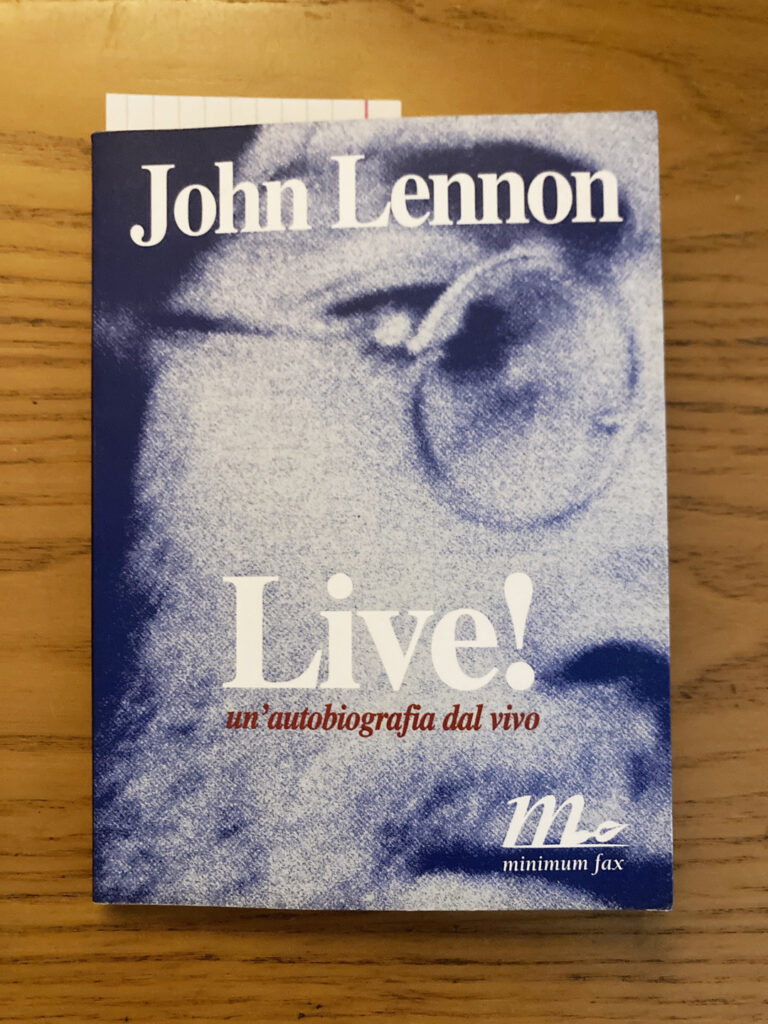
John Lennon wrote about two hundred songs, including those written in collaboration with McCartney, his solo catalog, and those written for other authors. There is no official autobiography of Lennon (who knows if he would have written one had he lived past forty) but In his own words (John Lennon Live! is the Italian version) is an autobiography reconstructed from his own words released in a little less than twenty years of interviews. Unfiltered or edited words, what he genuinely felt he had to express at a given moment. Sincere as much as impulsive, so much so that over the years Lennon himself changed his mind about many things and re-read his life with more maturity.
In Lennon’s time social media did not exist and the only way to make your voice heard was through traditional media, magazine, radio, or TV interviews (only if you were famous). Today Lennon would probably be a heavy social media user, I’m almost convinced of it, and his autobiography would be full of posts and tweets. But if I think about what I read on social media today (where anyone can write whatever they want without filters) and imagine most users’ autobiographies based on their public statements, it would result in a catalog of human oddities, monsters, unreal people, and very few normal people.
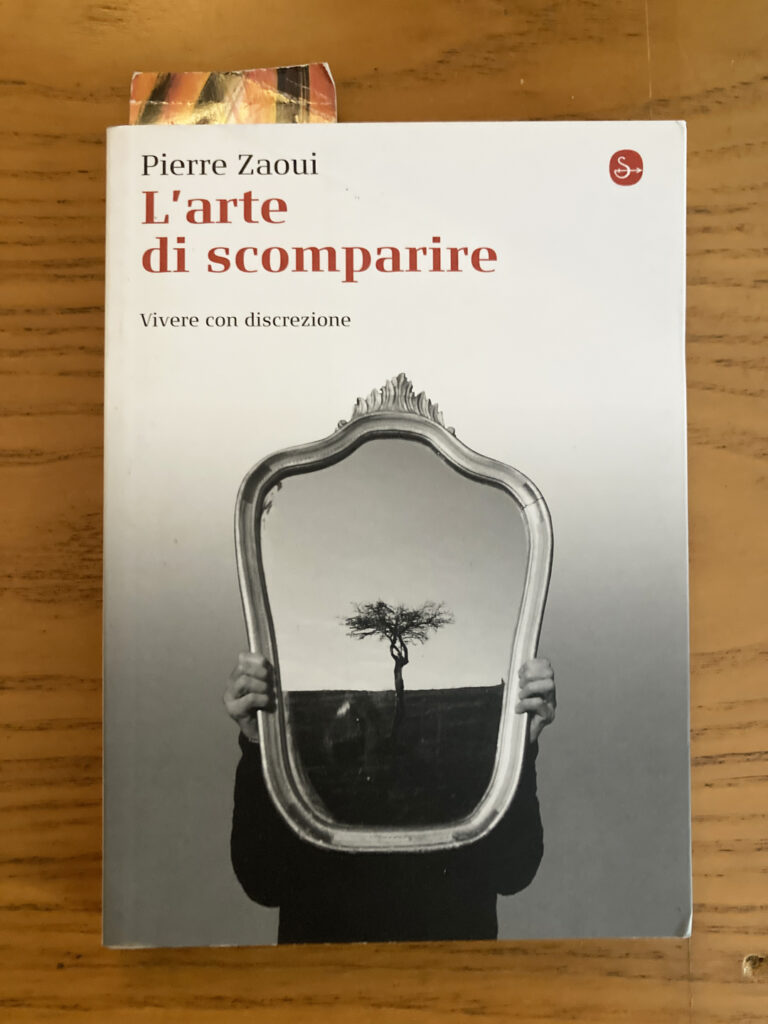
While Newport’s Deep Work advises abandoning social media with the aim of achieving states of concentration high enough to produce quality results, L’arte di scomparire (original title La discrétion. Ou l’art de disparaître) by French philosopher Pierre Zaoui (a book that requires slow and concentrated reading) reflects on the theme of discretion, of observing without being observed, of an art that, in an era of appearances, theatricality, and wanting to voice one’s opinion (almost always unrequested) at all costs and on every topic, “turning off the spotlight, lowering the volume, enjoying anonymity are political gestures before moral ones.” Discretion becomes a necessary form of resistance. Just as for Newport the few who cultivate “deep work” shine, so I believe discretion as understood by Zaoui ennobles people truly free from the conditioning imposed by modern society.
Did anyone notice my disappearance from social media? I really don’t think so, I didn’t receive any “hey where did you vanish to?” and that’s the beauty of it: we are not indispensable, most people (if not all) can do without (or deep down aren’t even interested in) what we have to say or show.
In recent weeks I have received a few messages to my email info@sebastianodessanay.com, the contact on my site. They were messages of a certain relevance, one for example invited me, as the author of the 377 project, to participate in a public event dedicated to slow travel; another came from a distant relative who, through a series of word-of-mouth connections, was looking for his relatives in Sardinia.
This makes me realise that anyone who needs to get in touch with me can do so just fine. So I’ll see you soon on my website!
Sebastiano