
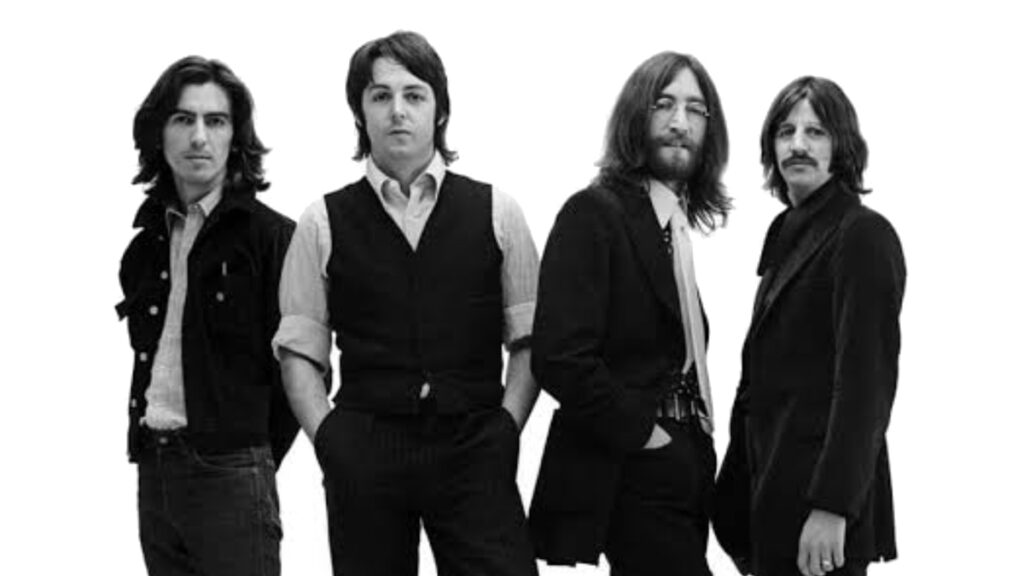
Introduction
This work, originating within the course of Analysis of Jazz Compositional and Performative Forms at the Canepa Conservatory of Sassari, taught by Prof. Enrico Merlin in the academic year 2024–25, takes inspiration from philosophical themes addressed during lectures while analysing works by artists outside traditional jazz, branching into genres such as European avant-garde, rock, and hip-hop, leading to the question “what is jazz?” or its mirror “what is not jazz?”, up to the question that gives us the answer to both: “does it matter?”
In particular, reading Geoff Wills’ work Frank Zappa and Jazz Music, instilled the desire to investigate the presence of elements of African American music and jazz culture within the official discography of the Beatles, through the analysis of forms, rhythmic, melodic, and harmonic elements, and not least the cultural context in which these developed. Indeed, I consider it necessary to follow a multidisciplinary approach encompassing all these aspects as interconnected and present—sometimes explicitly, sometimes very subtly—in the creative trajectory of the Liverpool quartet, to which I will attempt to give a specific shape.
Historical background
The Beatles, active from the late 1950s to 1970 (excluding the three-way reunion for the creation of the Anthologies in the nineties, and the two-way one for the last single “Now and Then” in 2023), represent an important case of cultural and musical cross-pollination between the United Kingdom and the United States, in particular between “white” and “black” music, despite the two countries previously enjoying significant exchanges regarding genres such as folk, country, gospel, blues, jazz (suffice it to think of the swarm of British jazz orchestras from the late 1930s or precursors of British bebop like Ronnie Scott).
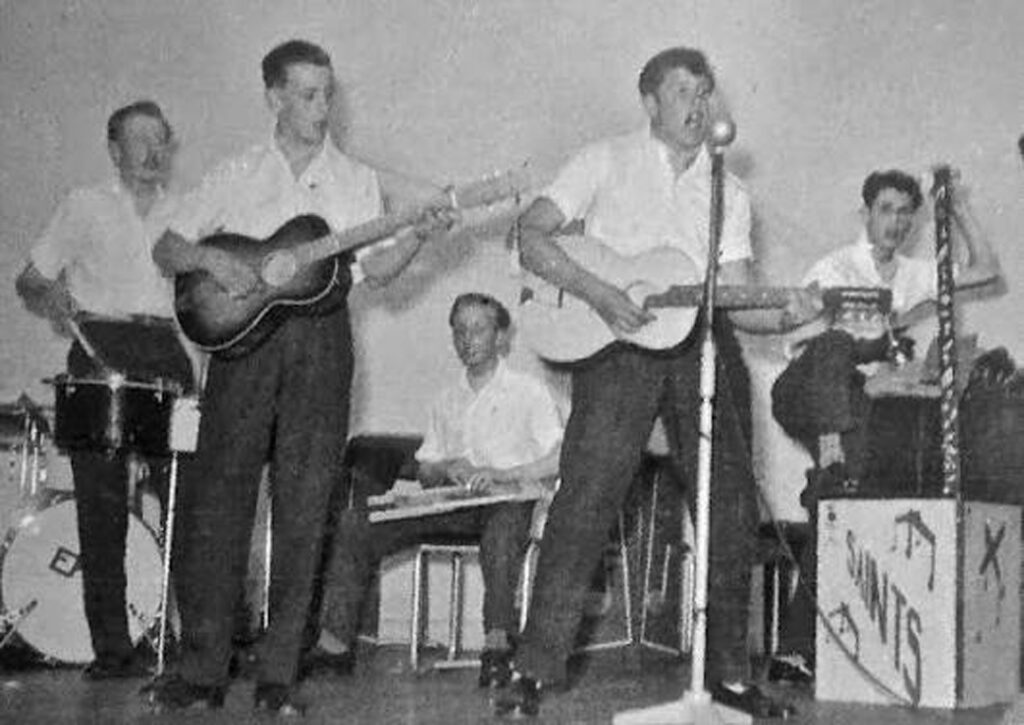
The Beatles’ music was born on the wave of American rock and roll and skiffle, a genre born in the US that mixed folk, blues, and jazz and became extremely popular in the UK in the 1950s. Liverpool, the Beatles’ birthplace, a port and multicultural city, was the most important access point for record novelties coming from the United States. Local young musicians could listen to the latest American releases, absorbing influences ranging from rhythm and blues to country, and especially nascent rock and roll. This stimulating environment fostered the birth of numerous musical groups, including the Beatles. Elements of each group member’s biography become important here to understand the presence of specific elements of African American music within songs often written individually. Even after the Beatles’ breakup, solo experiences and discographies will reveal all members’ deep emotional tie to African American music.
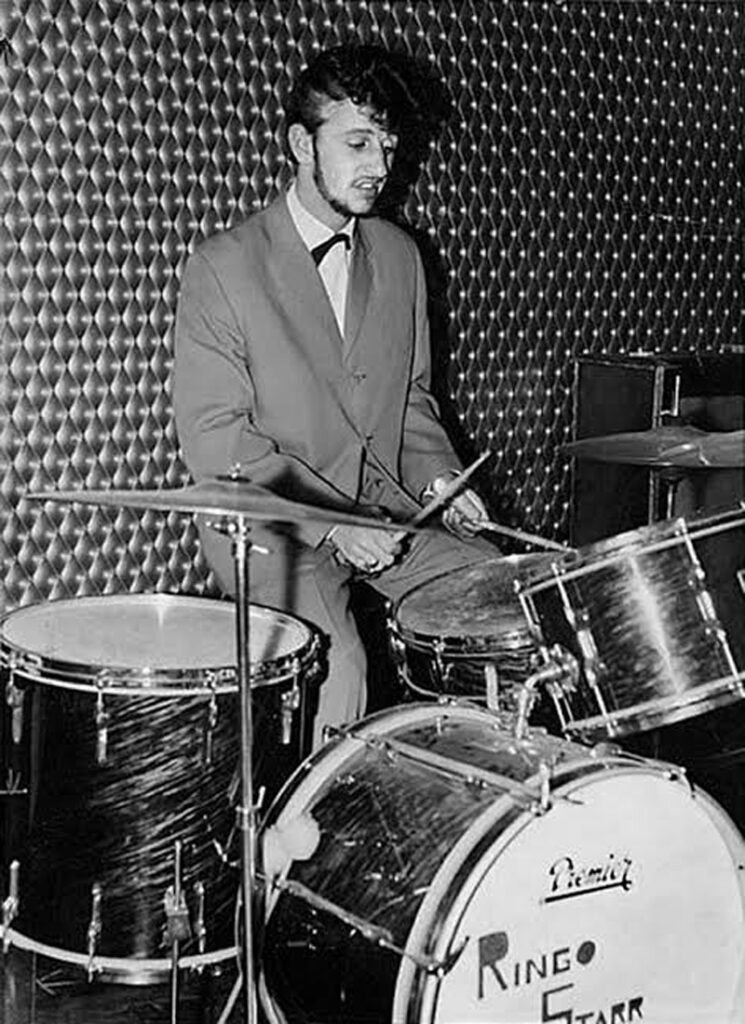
Ringo Starr, the oldest in the group, states he grew up with a large quantity of jazz big band records at home. It is no coincidence that among the four, as we will see in the section dedicated to rhythmic aspects, Ringo is the engine of the Beatles’ groove and swing, understood as that “feel” that keeps the music always moving forward. Nor is it a coincidence that, as soon as the Beatles broke up, his first solo album Sentimental Journey (1970) is a collection of American standards with which Ringo claims to have grown up.
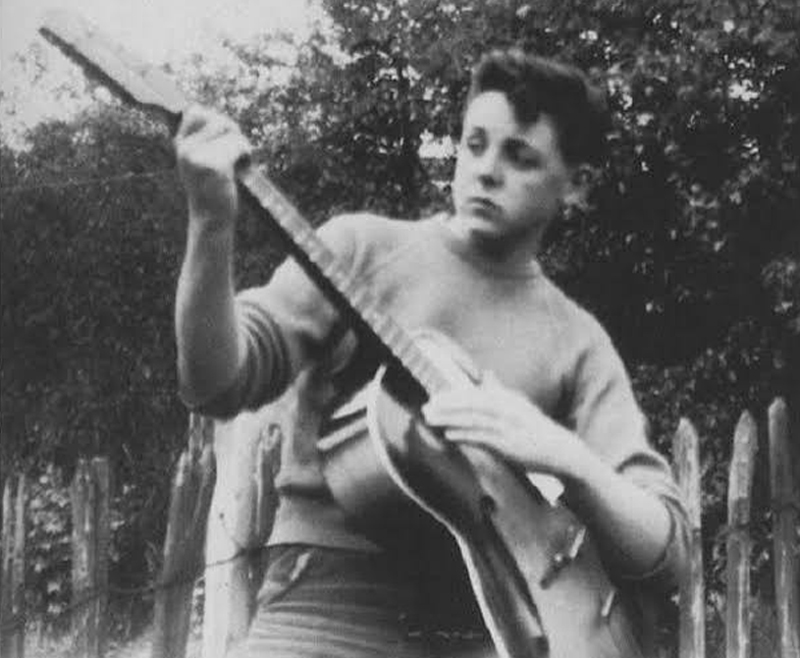
Paul McCartney‘s father was an amateur musician with a jazz background. In the 1920s and 1930s he played piano and trumpet in the Jim Mac’s Jazz Band, an amateur group active in the Liverpool area. His repertoire included jazz standards, ballads, and swing tunes, influenced by the great names of the era like Louis Armstrong and Duke Ellington. This musical environment deeply influenced Paul, who from childhood was exposed to rich harmonic structures, sophisticated melodies, and jazz sensibilities that would emerge, often subtly, in many of his compositions with the Beatles. Paul, unlike Ringo, would wait many decades before releasing Kisses on the Bottom (2012), a collection of covers of pop and jazz songs from the 1920s to the 1950s, some sung in crooner style. Previously he had already paid homage to the African American rock and roll tradition dear to him with CHOBA B CCCP (1988) and Run Devil Run (1999).
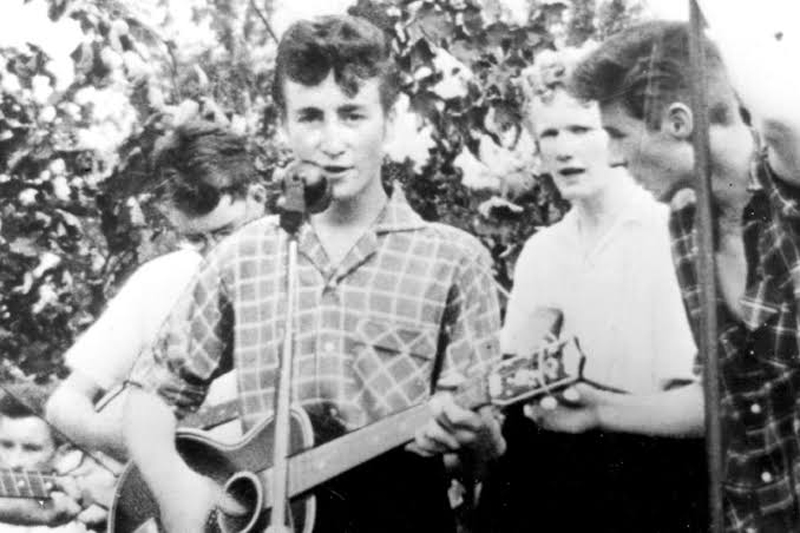
John Lennon was also deeply influenced by African American music, in particular rock and roll, rhythm and blues, and soul, genres incorporating many rhythmic and vocal characteristics of jazz and reflected in his expressive, often rough and bluesy vocal style. Lennon’s rebellious spirit, similar to Zappa’s who in 1914/1974 stated “Jazz isn’t dead, it just smells funny,” led him to say that “jazz is just a bunch of old guys drinking beer, smoking pipes, and not listening to music.” However, it is known that after meeting Yoko Ono, Lennon also took an interest in Ornette Coleman’s experimental jazz, while preferring the spontaneity of African American music in its more direct forms, like rock’n’roll and blues. With the album Rock’n’Roll (1975) he paid homage to the music of his origins and together with Yoko Ono showed interest in experimental improvisation in records like Two Virgins (1968) and Life with the Lions (1969) exploring free forms inspired by avant-garde rather than traditional jazz.
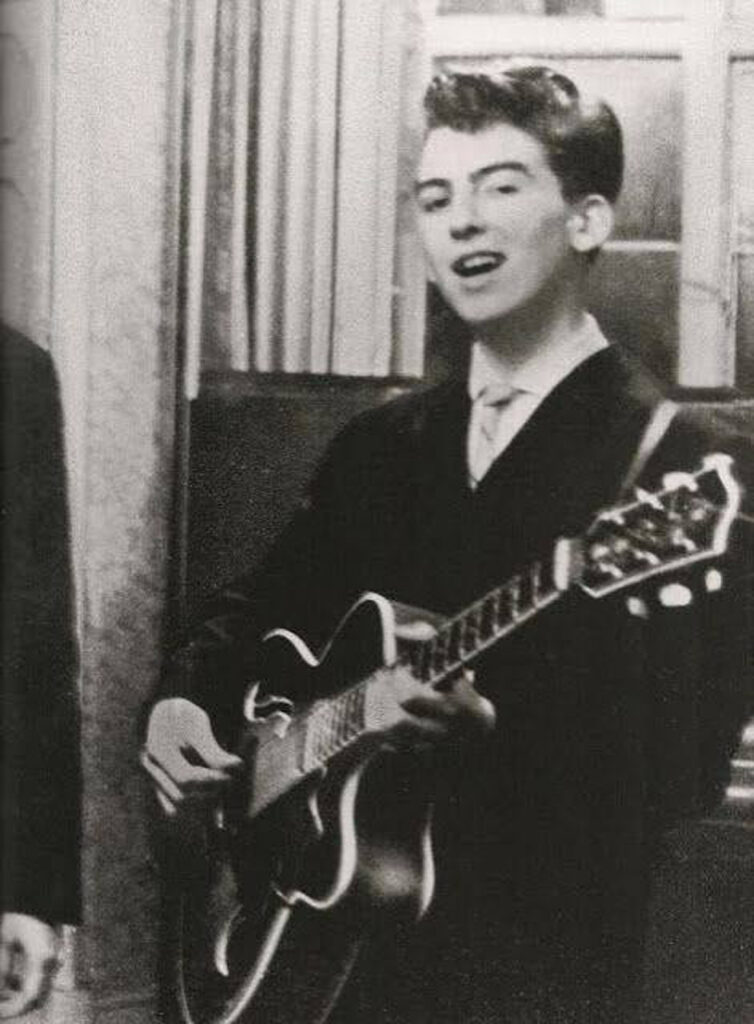
George Harrison, like the other Beatles, grew up influenced mostly by rock and roll, but showed occasional interest in elements of jazz and improvisation, especially in the more mature phases of his career. Although his guitar style remained anchored in rock, blues, and Indian music, Harrison appreciated artists like Django Reinhardt and respected jazz harmonic complexity. In 1969 he was interested in making a jazz album, and the Modern Jazz Quartet was in London to record the album Space. Harrison jammed in the studio with Percy Heath and Connie Kay, recording hours of improvisations. Unfortunately, the tapes from that session are lost. Harrison was the only one not to release solo albums dedicated to African American music, but his cover of Rudy Clark’s “Got My Mind Set on You”, released on the Cloud Nine (1987) album, achieved great commercial success.
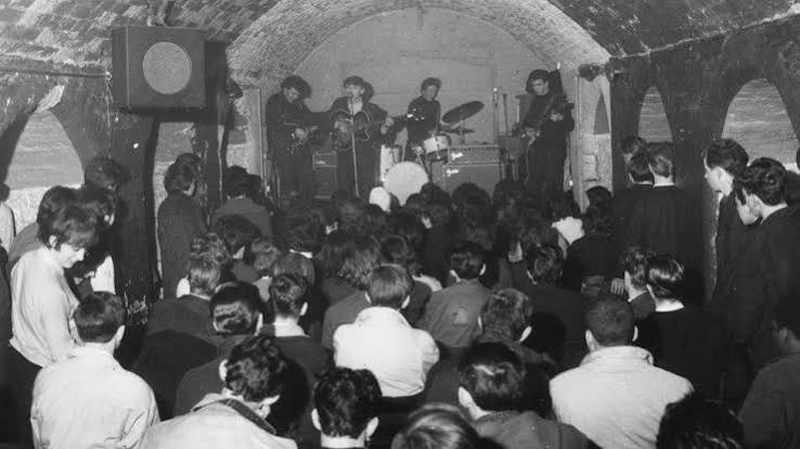
In the late 1950s, before the Beatles began performing at Liverpool’s Cavern Club, the venue was a jazz club inspired by Paris’s Caveau de la Huchette. Founder Alan Sytner wanted to make it the main jazz club outside London. On the opening night of January 16, 1957, the Merseysippi Jazz Band played. In the early years, it hosted artists like Acker Bilk, Johnny Dankworth, and Ronnie Scott (who would later play on “Lady Madonna”). In the 1960s, Sytner noted the rise of rock and roll and skiffle, organizing the first Merseybeat night (as the nascent sound to which the Beatles belonged was called) on May 25, 1960 with Rory Storm and the Hurricanes (the group Ringo Starr played in before joining Lennon, McCartney, and Harrison). However, the Cavern maintained a jazz presence, with groups like the Temperance Seven, and its jazz atmosphere certainly contributed to the Beatles’ musical growth.
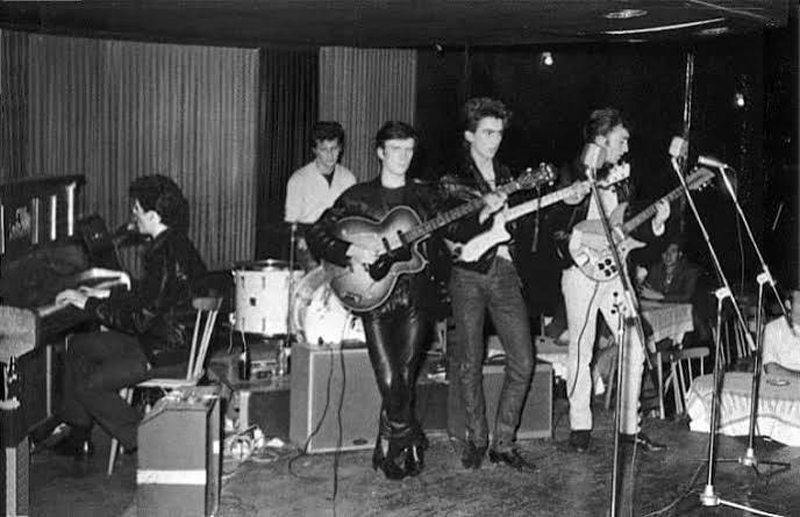
Before signing with Parlophone in 1962, the Beatles already had a very rich repertoire, consisting largely of African American music covers. The Hamburg experience from 1960 to 1962 was decisive for their musical formation. In the city’s clubs the group performed multi-hour sets including rock and roll, rhythm and blues, and soul tracks by authors like Little Richard, Chuck Berry, Isley Brothers, Ray Charles, and some standards like “I Remember You”. In this period the line-up thoroughly absorbed African American musical structures and performance practices. Twelve-bar blues, shuffle, gospel-rooted shouted vocals, and the presence of rhythmic stop-time are all components entering their musical grammar. Guitar language also reflects the influence of Chuck Berry and Carl Perkins, just as vocal language is indebted to Little Richard’s rock and roll, Ray Charles’s soul, and call-and-response techniques.
Stylistic and cultural aspects in the official discography
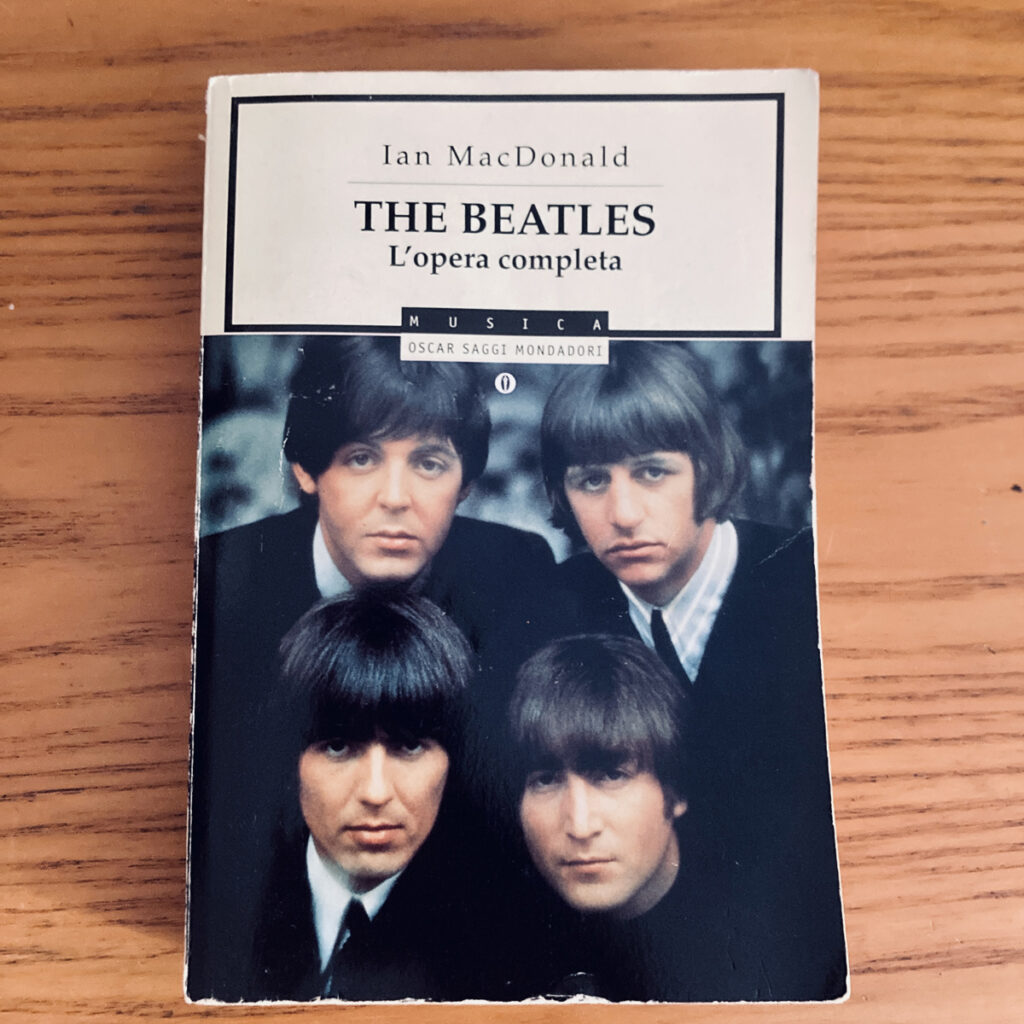
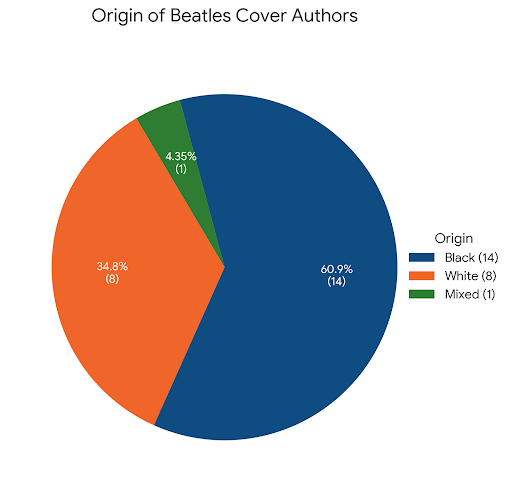
Ian MacDonald in his fundamental work Revolution in the Head (1994) divides the Beatles’ discography into three moments: ascent, peak, and descent, in relation to their career and creative trajectory. However, I believe that from a stylistic point of view, only two main periods can be recognised: the first characterized by a strong African American influence, which also incorporates twenty-four (out of twenty-five total) covers by predominantly African American authors (see Figure 1), and a second characterised by a personal style of exquisitely British matrix (both in music and lyrics) which, while not remaining immune to African American influences, draws from traditional European, Asian, and 1960s avant-garde contemporary music to create one of the most original repertoires in twentieth-century music history.
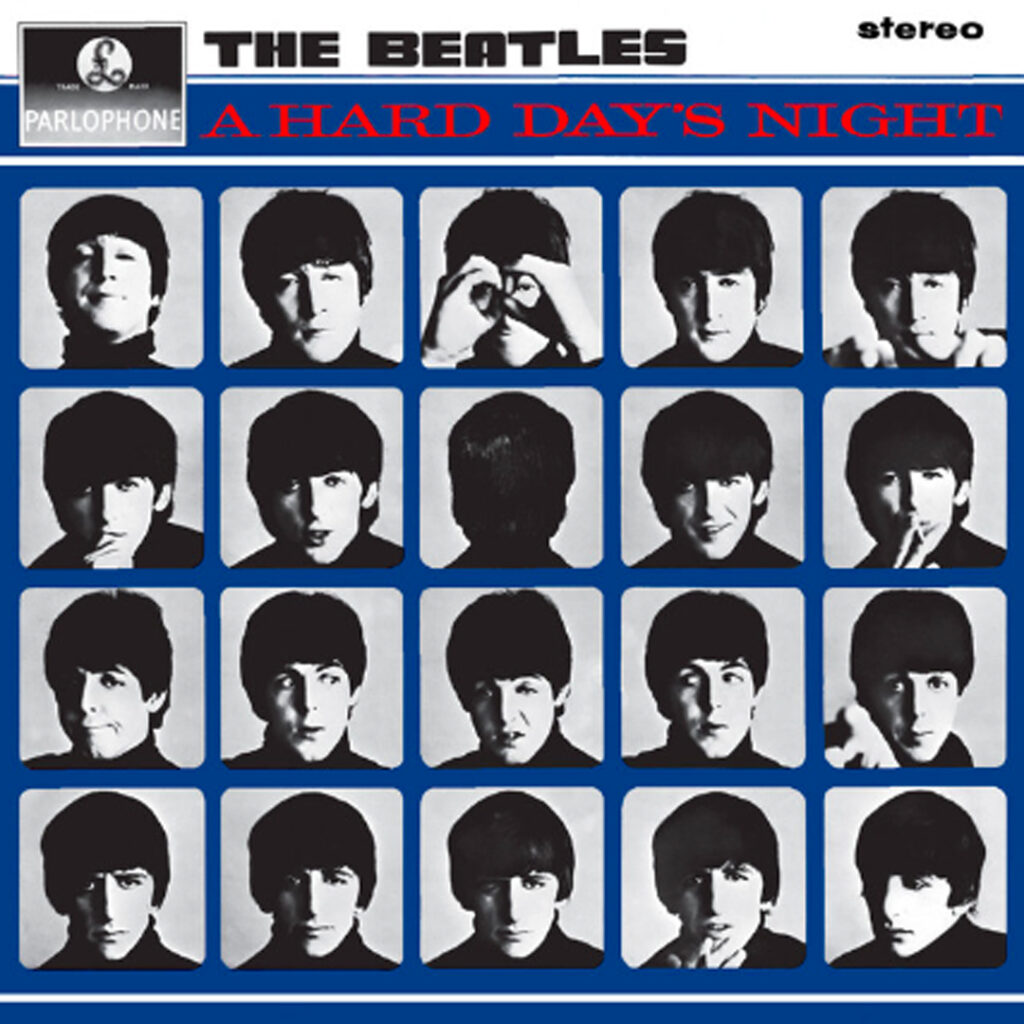
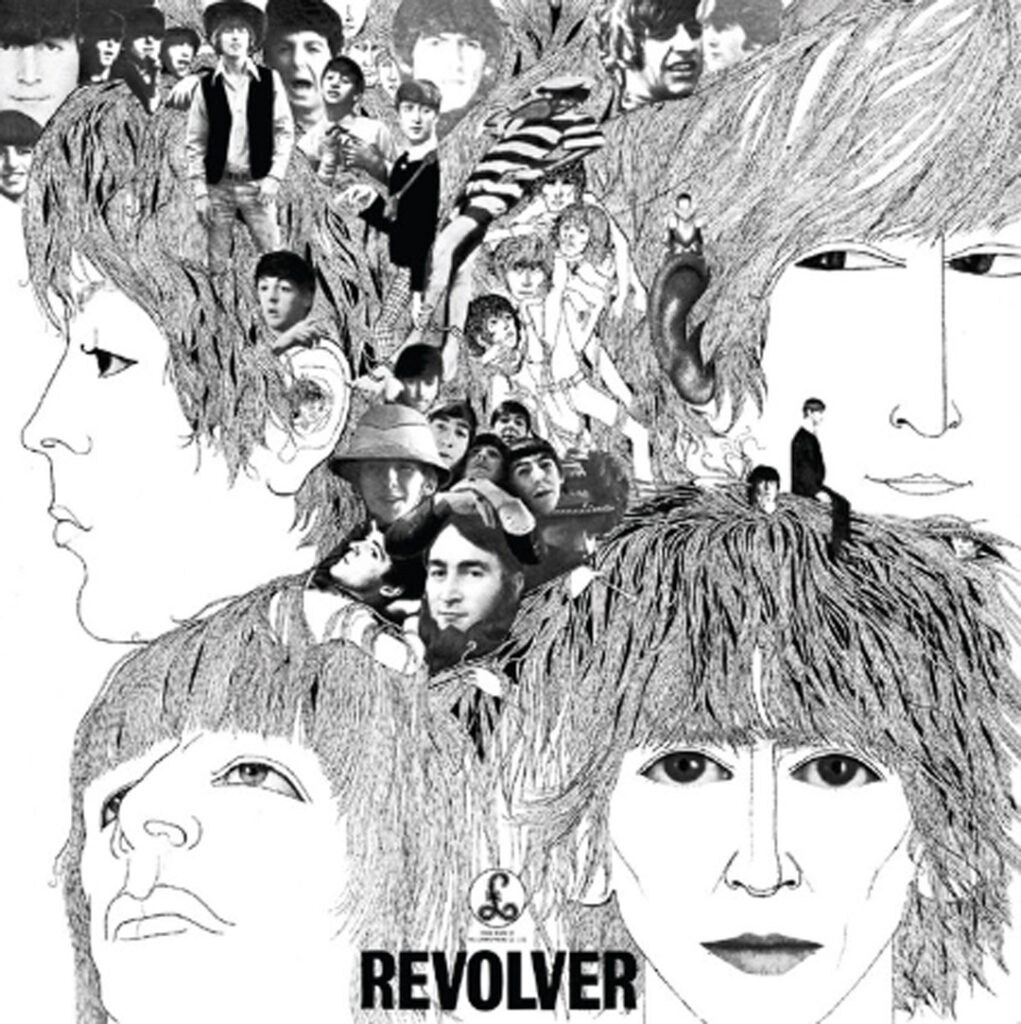
From my point of view, the albums Please Please Me, With the Beatles, A Hard Day’s Night (the only one without covers), Beatles for Sale, and Help! belong to the first period. Revolver, Sgt. Pepper’s Lonely Hearts Club Band, Magical Mystery Tour, The Beatles (the so-called “White Album”), Abbey Road, and Let It Be belong to the second period. The latter album, in a sort of closing circle (despite being recorded previously at Abbey Road), contains the last of the twenty-five covers (and the only one coming from English folklore, “Maggie Mae”) and a series of tracks (including “One After 909”, one of their earliest compositions) in which the Beatles find themselves retracing their African American musical roots.
In light of this division, there is a central moment that separates the two aforementioned periods, which incidentally coincides with the decision to stop performing live, where the album Rubber Soul acts as a true breaking point between the squeaky-clean, slim-suited, skinny-tied, boot-wearing Beatles who make rock and roll their banner while seeking their own original style, and the experimental, innovative Beatles who, in personalised clothing, long hair and beards, reach full musical maturity and seal their original brand in twentieth-century music history.
Instrumentation and sound
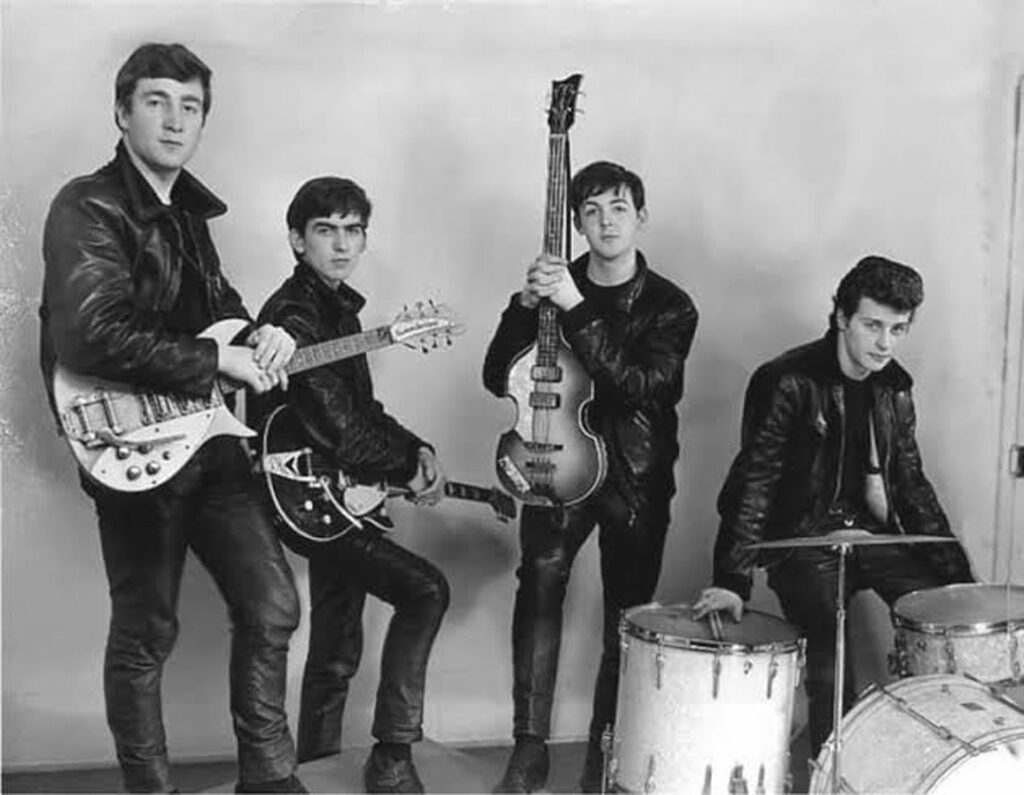
The Beatles adopted the classic line-up of two guitars, bass, and drums in 1961, taking inspiration from the skiffle and rock and roll groups that influenced them during their formative years in the late 1950s. This line-up was inexpensive and perfect for venues, dance halls, and clubs like the Cavern, but above all offered rhythmic and melodic flexibility: one guitar handled rhythm and chords, the other lead lines. While Decca rejected the Beatles with the rationale “Guitar groups are on their way out… The Beatles have no future in show business”, George Martin tested himself in producing a relatively new instrumental line-up for him (having been up to that moment producer of baroque music, comedy records, and radio shows for Parlophone).
Over time, partly thanks to Martin’s suggestions, the Beatles significantly expanded their instrumentation, and many of these choices reflect the influence of African American music. The use of piano (occurring sporadically already from the first album on “Misery” and played by Martin himself) and the Hammond organ, fundamental instruments in gospel, soul, and rhythm and blues, became increasingly central in their arrangements (think of tracks like “Lady Madonna”, inspired by Fats Domino’s boogie-woogie and rhythm and blues style), to the point that for the Let It Be sessions Billy Preston was hired, an African American keyboardist present in some of the album’s tracks and in the iconic rooftop live at Apple headquarters in London on January 30, 1969. Horn sections, present in “Got to Get You Into My Life” or “Savoy Truffle”, show the influence of Motown and Stax soul, with arrangements evoking Otis Redding or James Brown, and Paul McCartney’s bass playing often approaches the style of African American pioneers like James Jamerson.
This instrumental extension (along with the endless one not mentioned here because unrelated to African American music, such as the use of percussion, sitar, mellotron, electronics, and the “recording studio” as instrument) was also made possible thanks to collaboration with George Martin and Abbey Road studio engineers, among whom perhaps the most important was Geoff Emerick. It is worth mentioning the famous “reverse” effect, namely the technique of recording parts and reversing the tape so they play backwards. This technique, invented by the Beatles at Abbey Road and adopted today by musicians in every musical genre, has been so standardized that it is regularly included on all major digital multi-effects. An artist in the jazz world who uses it regularly and has made it almost a personal trademark is Bill Frisell, who has repeatedly paid homage to the Beatles and especially to the architect of the most extreme experiments among the Beatles, John Lennon (responsible for that masterpiece that is “Tomorrow Never Knows”).
Vocal
The Beatles’ vocal style was deeply influenced by African American music, in particular the vocal traditions of rhythm and blues, soul, gospel, and early rock and roll. These genres, deeply rooted in black American culture, shaped the expressive and emotional qualities that became hallmarks of Beatles singing. One of the most evident characteristics is the use of “call and response“, an African-origin vocal technique central in gospel and soul. This can be heard in tracks like “Twist and Shout” where the lead vocal is followed by choir responses.
The Beatles often used tight harmonisations similar to those of Motown or doo-wop groups, as in “This Boy” and “If I Fell”, testifying to their affinity with the vocal aesthetics of African American groups such as The Shirelles, The Marvelettes, The Miracles, and The Isley Brothers. The raspy timbre popularized by black artists like Little Richard and Ray Charles is found in Lennon’s delivery on “Twist and Shout” (actually due to a heavy cold forcing Lennon to give his all in the final take of the historic February 11, 1963 recording session at Abbey Road for the first album Please Please Me) or McCartney’s on “Long Tall Sally”. Another key influence is melismatic singing, i.e., executing multiple notes on a single syllable, typical of gospel and soul, used for example in parts of “Oh! Darling”.
Instrumental styles
The Beatles, especially in the second part of their discography, incorporated other stylistic elements from jazz and African American music, beyond early rock and roll, blues, and rhythm and blues, blending soul, funk, swing with their pop-rock sound. Paul McCartney, for the reasons expressed previously, is one of the main drivers of this shift, evident in many of his compositions. The first emblematic example is “Got to Get You Into My Life”, a direct homage to Motown soul and Otis Redding. Here the horn arrangement recalls big bands, with syncopated riffs typical of soul and rhythm and blues. “Penny Lane” and “Sgt. Pepper’s Lonely Hearts Club Band” also show jazz and African American brass band influences, with careful horn arrangements and atmospheres recalling New Orleans traditions and marching bands. “When I’m Sixty-Four” and “Your Mother Should Know” evoke 1920s and 1930s jazz, with clarinets and swing, recalling figures like Benny Goodman. “Lady Madonna” is a clear homage to Fats Domino’s boogie-woogie, with syncopated piano and soul-style horns.
The Beatles (the “White Album”) contains the highest number of stylistically jazz-adjacent tracks: “Honey Pie” recalls traditional Fats Waller and Duke Ellington jazz with its retro style and music hall arrangements. With “Ob-La-Di, Ob-La-Da” the Beatles approach reggae, an afro-Caribbean genre newly born in Jamaica and spreading in those years also in the UK. “Savoy Truffle”, a Harrison track, blends funk and soul with horn arrangements rich in jazz harmonies, showing the influence of James Brown’s sounds, whereas in the free outro of “Helter Skelter”, sounding like a never-ending jam (which would unleash Ringo’s wrath with his famous shout “I’ve got blisters on my fingers!” ending up on the final take), free jazz inspiration is grasped, with dissonant and chaotic improvisations. “Martha My Dear”, “Rocky Raccoon”, and “I Will”, all by McCartney, also show arrangements bearing witness to the vastness of jazz references drawn upon by the writer. Among lesser-known but relevant tracks, “You Know My Name (Look Up the Number)” explores with irony and experimentation various styles ranging from calypso to traditional jazz (see section on rhythm), showing the group’s versatility in playing with African American influences.
Cultural references
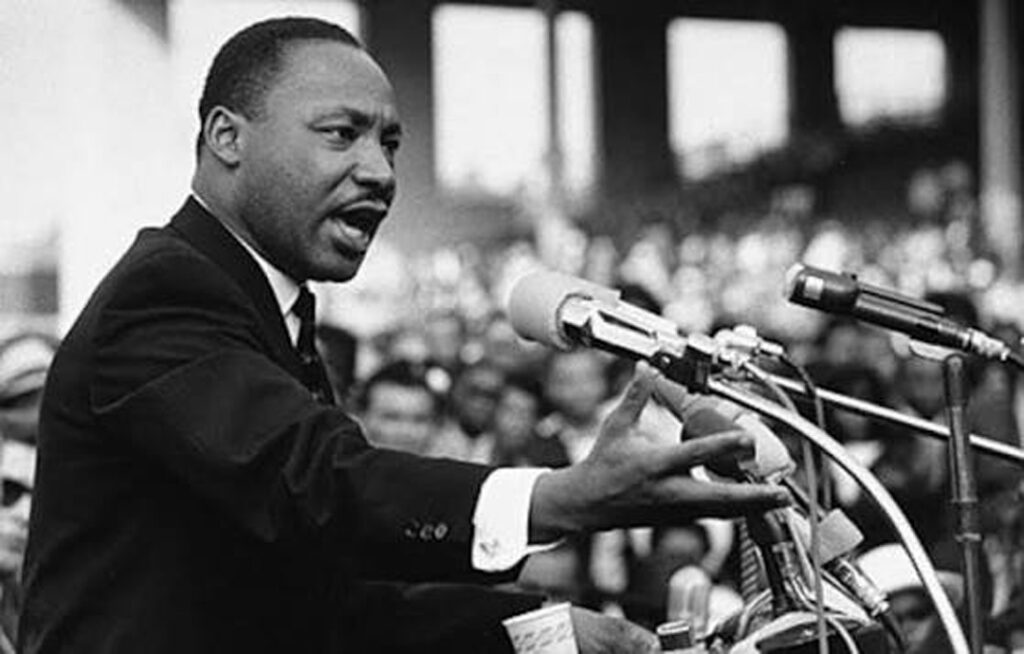
The Beatles were not a group that openly sided politically like some of their contemporaries, but their relationship with African American culture and history was nonetheless deep and respectful, visible both in their lyrics and actions. A very significant example is Paul McCartney’s song “Blackbird”, recorded in June 1968, directly inspired by the civil rights movement in the United States (Martin Luther King was assassinated just two months earlier). The image of the little black bird learning to fly becomes a powerful metaphor for the struggle against racial oppression and hope for freedom for millions of people. Their commitment had previously been seen in real life: in 1964, when invited to play in Jacksonville, Florida, they refused to perform before a segregated audience. A gesture that at the time was far from taken for granted, but demonstrated their firm opposition to racial discrimination.
Unlike artists like Bob Dylan or Joan Baez, their way of being engaged was more discrete, yet no less sincere. In the Anthology documentary, George Harrison speaks with great admiration of musicians like Ray Charles and Little Richard, who not only influenced them musically, but were also symbols of the struggle against social injustices. They knew well what it meant to live in a world that discriminated against them, and the Beatles were inspired by this not only as musicians, but as people. The Beatles’ respect and solidarity toward African American culture is a subtle yet powerful thread running through their entire career.
Structural, formal, and performative music analysis
Rhythmic aspects
The rhythm machine behind Beatles songs is Ringo Starr. His drumming is unique and recognizable, partly thanks to his physical peculiarity: a lefty playing a right-handed kit. This entails unusual accents in some fills and grooves, giving an asymmetric naturalness typical of many Beatles song sounds. Among the main inspirations in his musical growth are Cozy Cole and Gene Krupa, jazz drummers who played with Cab Calloway and Louis Armstrong. From them Ringo inherits not only a particular approach to swing but also techniques like the expressive use of the floor tom to create afro-jazz grooves, as can be heard for example in “Come Together”. Ringo Starr’s “feel” is unmistakable: just listen to “I Feel Fine”, “Ticket to Ride”, “Rain”, “Tomorrow Never Knows”, or the legendary solo in “The End”, where the kick is in four and the toms “swing” in an almost jazz-like manner.
According to Gregg Bissonette, a drummer who played in Ringo Starr & His All-Starr Band, Ringo “breathes” with the song, using the drums also as a melodic instrument, and seems to “swing” both in “shuffle” rhythms (where eighth notes have varying durations within a triplet figuration, as in swing) and on “straight” ones (where eighth notes have equal duration, i.e., “straight”). This is due to his refined hi-hat technique. For example, at about one minute into the video of “I Want to Hold Your Hand” in the February 9, 1964 Ed Sullivan Show version, slowing down the speed, it is clearly noted how his striking of the hi-hat happens in two different ways: downbeat eighth notes, more accented, are struck outward from the kit, while upbeat eighth notes happen with a hand/wrist direction change inward toward the kit. Furthermore, the spot on the hi-hat where the stick falls changes with every eighth note, imparting not only a different dynamics but also a different timbre to each note. This variety is what gives an aura of swing to many Beatles tracks, both shuffle and straight (see Figure 2 for the relationship between the two types).
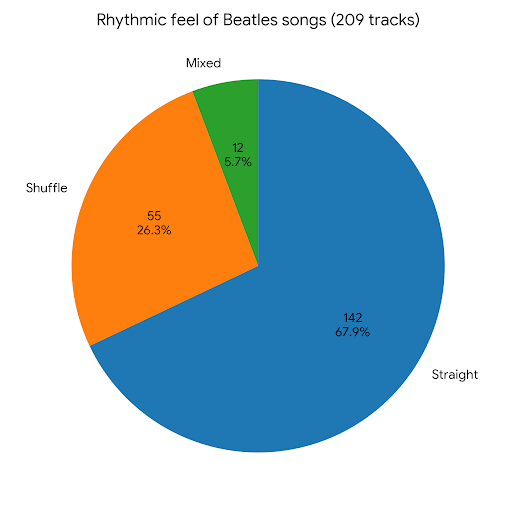
In shuffle/swing rhythms like in “All My Loving” and “I’m a Loser” Ringo is fluid and dynamic and the rhythmic figuration is almost always the one indicated in Figure 3:
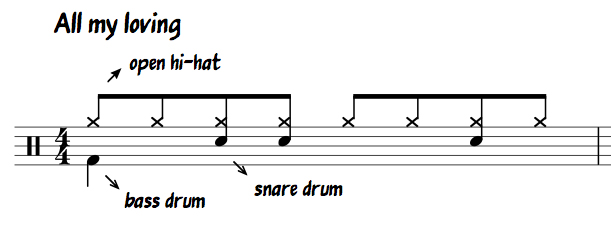
Figure 3: transcription of rhythmic figuration on “All My Loving”
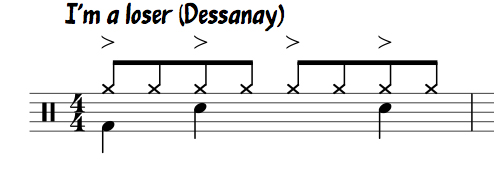
In Ringo’s drumming one can almost hear the typical swing figuration obtained by removing the second and sixth eighth notes from this typical figuration, often played by Ringo on cymbals as well. However, official transcriptions do not highlight dynamic details and articulation. For example, the official transcription of the drum part on “I’m a Loser” omits accents on downbeat eighth notes revealed by isolating the drum track (via online application LALAL.AI), a sound due to the hi-hat technique described above.
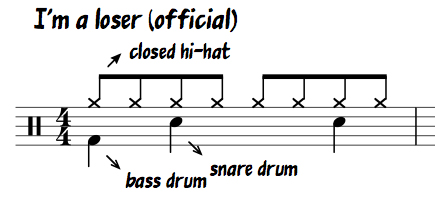
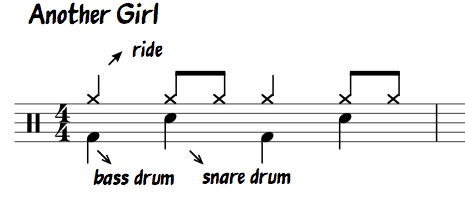
On the track “Another Girl” the typical swing figuration appears, even though the song and pop genre the Beatles are shaping require the constant use of kick on one and three and snare on two and four.
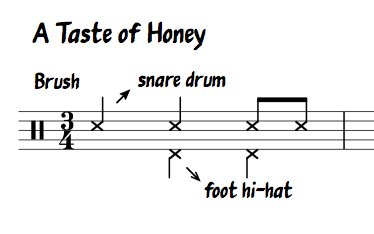
Another feature of Ringo’s refined drumming can be heard in tracks like “A Taste of Honey” (for example in three-quarter time verses) and “When I’m Sixty-Four” (from 0:07 to 0:37 for example) where brush accompaniment happens with elegance, jazz-drummer style.
A small percentage of tracks (see Figure 2 again) use both straight rhythms and shuffle/swing tempos. “I Call Your Name” for example uses a straight rhythm for sung parts but switches to shuffle for the guitar solo. The first and last parts of “A Day in the Life” (attributable to Lennon) are straight, while the middle part (attributable to McCartney) is in shuffle/swing. Sung parts of “Rocky Raccoon” are straight while instrumental parts (featuring a sort of “scat” singing doubling an “honky-tonk” piano, and a typical bass-and-voice accompaniment imitating a tuba bass on two and four) are in shuffle/swing. Finally, the parodic, grotesque, almost caricatural track “You Know My Name (Look Up the Number)” contains as many as three rhythm changes: moving from a straight beat typical of rock and roll, to a sort of calypso, perhaps inspired by British-Caribbean music, very popular in the UK in the ’60s (and which among other things also permeates the jazz of British-Caribbean artists like Joe Harriott who not-so-coincidentally features a cracking track titled “Calypso” on his 1961 Free Form album), ending in full jazz swing with cabaret-style piano accompaniment, a non-sense vocalese solo, and a short saxophone solo intervention played by the Rolling Stones’ Brian Jones.
Rhythmic interplay
In rock and roll it often happens that straight and shuffle/swing rhythms are played simultaneously by different instruments. This rhythmic overlap has roots in blues and swing, adds drive, contrast, and rhythmic variety, and contributes to the genre’s characteristic energy and drive. For example, many early rock and roll drummers play with a swung beat, using hi-hat or ride with ternary subdivision (often the first and third triplet beat). Rhythm guitars often play shuffle too, recalling blues and jump blues influence. In these types of tracks the bass (or piano) may play straight eighth notes. Vocals may also have a straight flow, creating contrast with other instruments’ swung “feel”. This happens on “Long Tall Sally” where drums and guitars play swing, bass accompanies with a walking quarter-note line, and piano (played in studio by George Martin) accompanies with straight eighth notes, creating interesting rhythmic tension with the rest of the band.
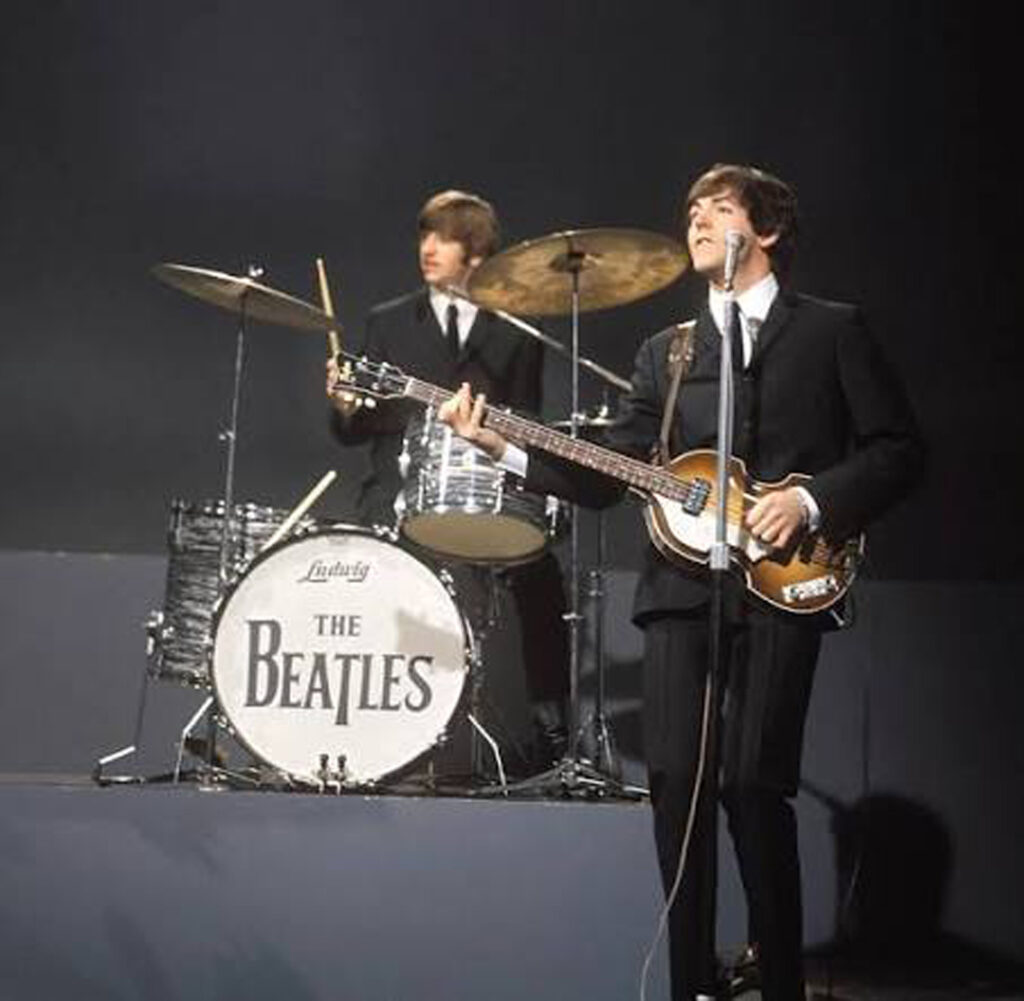
Paul McCartney has often spoken of the interplay he had with Ringo Starr, praising in particular musical sensitivity, “feel”, and the way Ringo’s drumming completed his bass playing. He repeatedly underlined that Ringo had an intuitive understanding of what a song required, making him the ideal rhythmic partner, creating a perfect tuning, a sort of non-verbal musical connection, what regularly happens between bass player and drummer in a jazz formation. McCartney states that sometimes for Ringo what he played wasn’t important as much as what he didn’t play, often leaving free space that gave the bass room to move. This is what happens in “Come Together” where Ringo’s slow and slightly delayed groove allowed McCartney to create the iconic bass line, melodic and airy, floating above the rhythm.
Bass accompaniment “in 2” using root and fifth (typical of tuba bass in New Orleans brass bands) can be heard on very many tracks, even in the second half of discography, and it is significant that it appears in the very first track published by the Beatles, “Love Me Do”, with a swinging flow; on other tracks accompaniment “in 2” can happen on a straight rhythm, like in “I’ll Follow the Sun”.

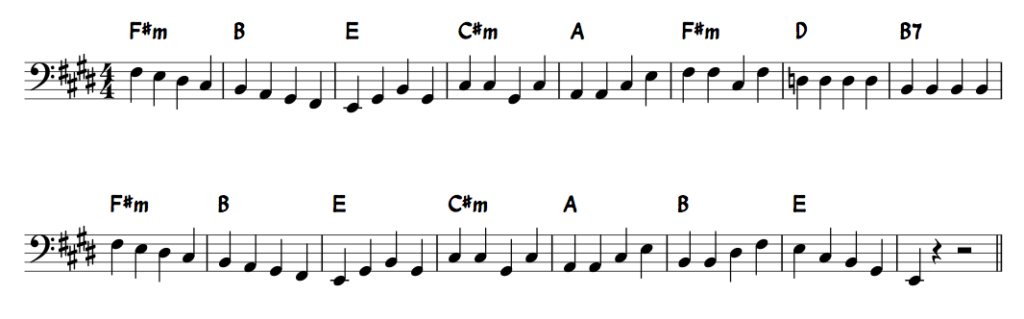
On “All My Loving” rhythm (see Figure 3) bass accompanies “in 4” (see Figure 13 below), a style McCartney applies to most first-period tracks, for example on “Tell Me Why” (see Figure 8).

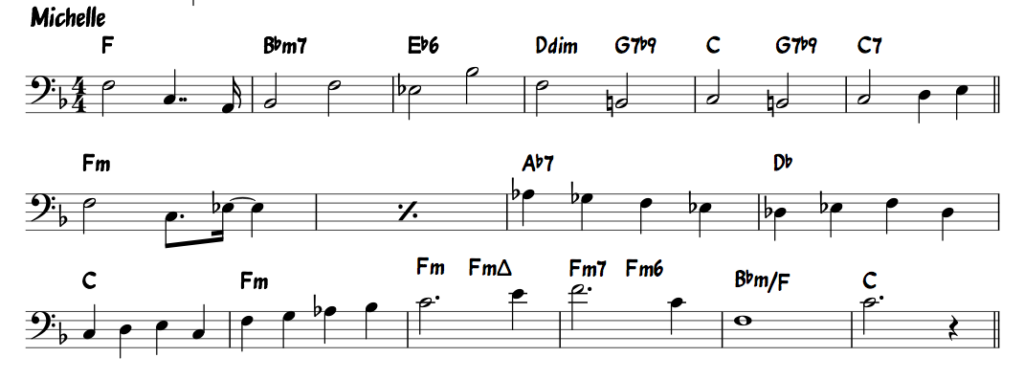
In “Michelle” (as happens in other pieces like “With a Little Help From My Friends”) the bass line moves from two to four (as indeed happens in most medium-tempo swing pieces) and also constitutes an incredible and wise melodic line (see next section).
Melodic aspects
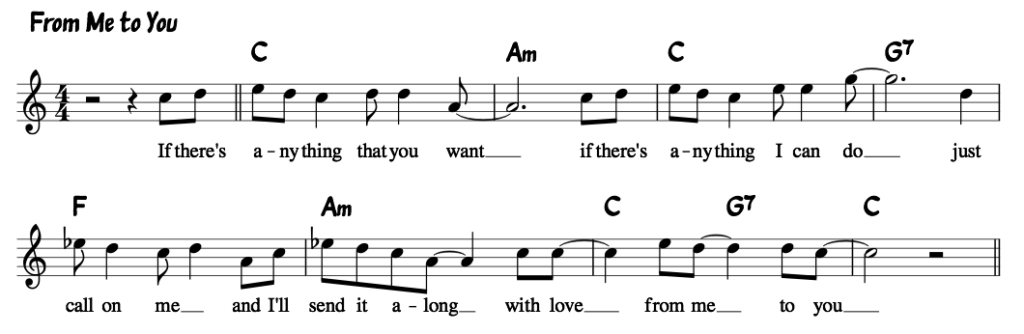
Melodic aspects in Beatles music represent one of the most distinctive components of their style. One of the most frequent melodic elements is the use of the pentatonic scale, both major and minor, evident in many vocal lines, bass lines, and guitar solos, particularly in tracks most influenced by rock and roll, blues, and folk. For example, in “From Me to You” and “Ticket to Ride”, vocal melodies move predominantly within pentatonic material, conferring immediacy and expressiveness going beyond traditional notation, obtained also via micro-intonations and slight pitch flexions, with glissandi, blue notes, and bendings typical of African American music, giving emotional intensity to the melodic line. Vocal melody is central especially in most of McCartney’s pieces, like “Yesterday” or “Michelle”, where lines are tonal but often based on unusual intervals showing melodic refinement.

The same technique is used in guitar solos, not just in first-part discography tracks, rock-and-roll style, like for example in “I Saw Her Standing There”, but also in late career tracks. In “Something”, George Harrison uses a lyrical and melodic phrasing, closer to singing than rock guitar technique, a recognizable style he will maintain throughout his solo career.
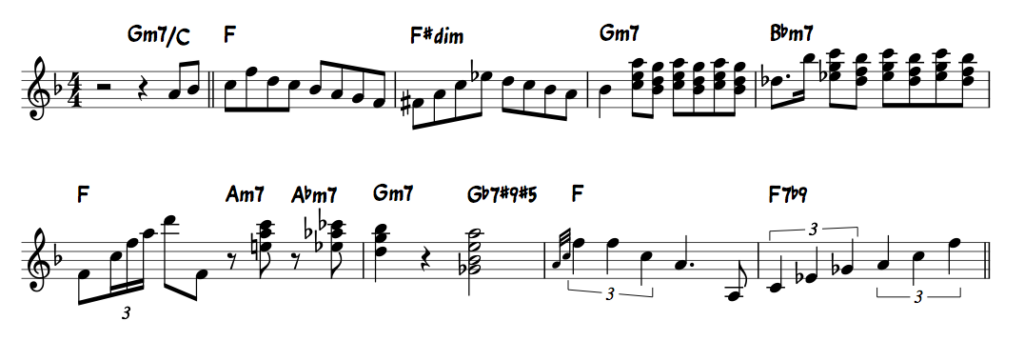
Even in more delicate or acoustic pieces guitar solos show particular melodic care. In “And I Love Her” the solo is simple yet highly melodic, echoing the same elements of the vocal line, and is built on the natural minor scale. In “Till There Was You” (see Fig. 12) the solo is clearly inspired by jazz and classical guitar, Django Reinhardt style. The solo develops on elegant and articulated melodic phrases, with a light and ornamental touch integrating perfectly with the track’s swing atmosphere, using a mix of scales, arpeggios, chords, and chromaticisms typical of jazz tradition, in tune with major, minor, diminished, and seventh chords.
The use of the mixolydian scale is often present in tracks presenting modal harmony (see next section). In “Norwegian Wood” and “Tomorrow Never Knows” Lennon’s vocal melody adapts to the underlying suspended seventh (sus4) harmony. Indian scales influence strongly emerges in George Harrison’s tracks in the second half of Beatles discography. Indian sounds are introduced with the use of the sitar on “Norwegian Wood” playing a mixolydian melody, but it is only in “Love You To” and above all in “Within You Without You” that melodies characterized by Indian modes appear, like the Khamaj scale (similar to western mixolydian scale but with microtonal variations). Even in subsequent and less Indian-sound-bound tracks like “Blue Jay Way” the melody uses atypical and oriental-flavored scales like the sixth mode of the harmonic minor scale, with a tone-and-a-half interval between first and second degree.
Bass also contributes significantly to the melodic component. In “All My Loving” the bass line uses a jazz-typical walking bass, creating a melodic counterpoint to vocals.
In some tracks, solos are performed by outside guest musicians. Although most of these are written—such as the beautiful French horn solo in “For No One,” with chamber-like textures very close to cool jazz, or the piccolo trumpet solo in “Penny Lane”—some are improvised and in a traditional jazz style, for instance Ronnie Scott’s tenor saxophone solo on “Lady Madonna” or Jack Fallon’s country-style fiddle solo on “Don’t Pass Me By.”
Harmonic aspects
Analysing the Beatles’ discography clearly reveals a surprising harmonic evolution, leading them from simple, functional structures to an increasingly rich, sophisticated, and cross-pollinated language. This process developed through a growing use of extended chords, original progressions, modality, and extra-European influences, with a deep assimilation of African American harmony—particularly derived from blues, gospel, soul, and jazz—fused with dissonances, unexpected modulations, and extreme harmonic freedom.
In the first part of their career, major and minor triads and sixth and seventh dominant chords dominate, reflecting harmonic sequences tied to simple African American-derived forms. The Beatles make these harmonies explicit both instrumentally and through their vocal style, which utilizes tight-harmony arrangements typical of doo-wop. However, even in this phase, examples of harmonic inventiveness emerge that testify to the search for fresh solutions and original sounds.
An emblematic case is the initial chord of “A Hard Day’s Night”, a complex chord (containing G, C, F, D, A distributed across guitars, bass, and piano) that has sparked debate among musicologists for decades. Though not easily classifiable under traditional tonal categories (often indicated as Gsus4/D), this chord introduces immediate harmonic ambiguity and strong expressive charge.
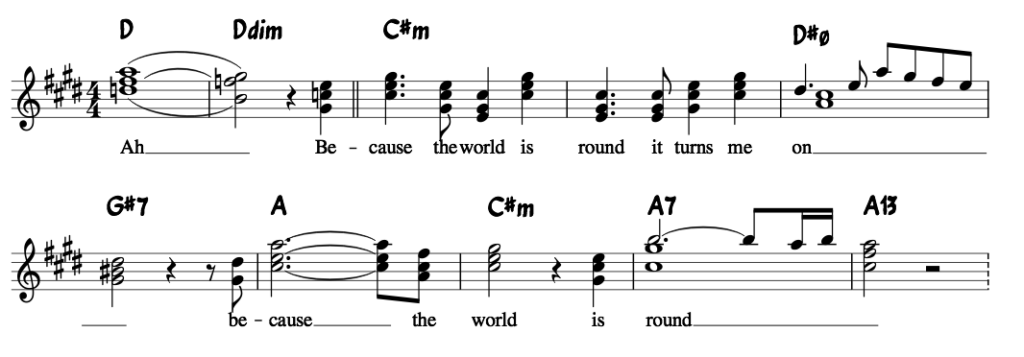
The use of major7 chords is frequent in tracks like “Here, There and Everywhere,” “Something,” and “Sun King.” Often these are accompanied by other chords typical of jazz, such as 7b9 and diminished (both present in “Michelle,” with diminished chords used extensively in “Because”), and augmented (already used in “Ask Me Why”). “Taxman” introduces the augmented ninth chord/sharp-ninth (7#9) for the first time, while “I Want to Tell You” stands out for its 7sus4 chords and signature edgy Harrisonian harmonic style.
Harmonic progressions in the Beatles span simple tonal sequences to sophisticated chains characterized by unexpected modulations and creative use of harmonic functions. In the early years, sequences frequently reflect the blues or doo-wop, growing more complex and articulated over time.
Ballads represent a prime example for observing the Beatles’ harmonic sophistication. Tracks like “If I Fell,” “Yesterday,” “Michelle,” and “Here, There and Everywhere” use secondary modulations and chords to move away from and return to the main key, making extensive use of ii-V cadences (adopting the convention of indicating minor degrees with lowercase and major degrees with uppercase roman numerals/letters), inherited from classical harmony but extremely widespread in jazz standards.
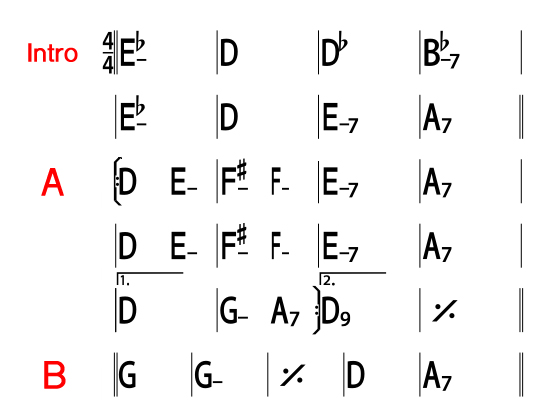
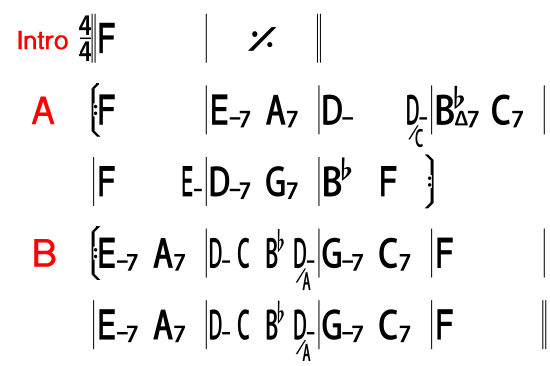
A typical jazz progression uses chromatic descent of the tonic in a minor key, as in the standard “My Funny Valentine” (i – imaj7 – i7 – i6). In the Beatles’ repertoire, this progression reappears, for example, at the close of the verses in “Michelle,” or at the opening of the verses in “Cry Baby Care” / “Cry Baby Cry”. A similar major version (I – Imaj7 – I7 – IV) is found at the opening of the verses of “Something”.
Probably influenced by the evolution of other genres like jazz, the Beatles also make modal harmony another hallmark of their musical evolution, particularly starting in 1965. In “Norwegian Wood,” the initial key of E major gives way to mixolydian harmony the moment the vocal melody touches the note D. This modal approach, reinforced by the sitar, creates an ambiguous, suspended atmosphere departed from only during the G minor bridge before returning to the home key via a ii-V cadence. More radical is the modal harmony of “Tomorrow Never Knows,” built exclusively on a C drone and the C mixolydian scale, without a true harmonic progression.
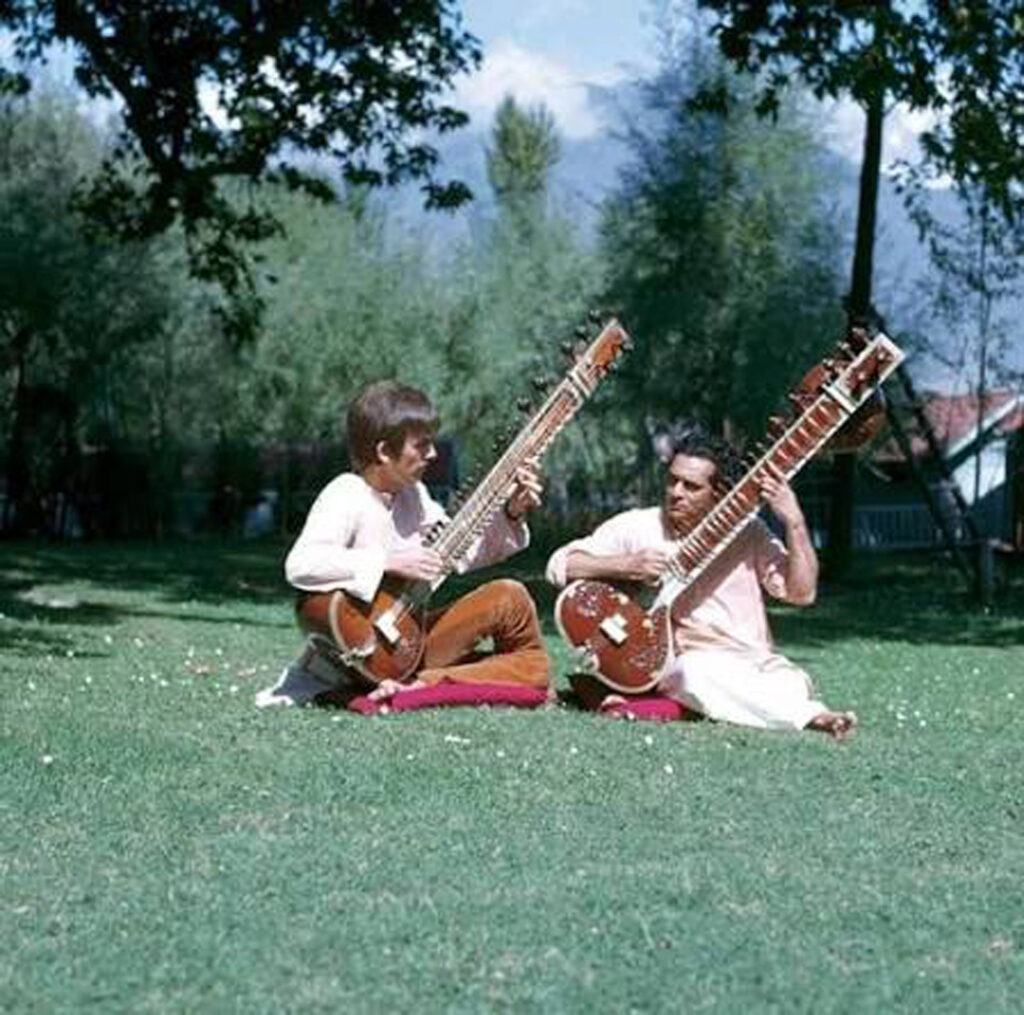
Indian music’s influence, largely thanks to George Harrison, manifests not only timbrically but harmonically. In “Within You Without You,” the structure is based as mentioned on the Khamaj scale, with a conception partly modal and featuring drones typical of classical Indian music. Harmony here assumes a spiritual function, far from European cadential logic, creating a static field where traditional Indian instruments develop slow transformations and melodic phrases.
A touching example of harmonic progression used by the Beatles in the final part of their career is “Because,” especially because it is realized primarily through vocal harmonisation (listen to the exclusively vocal version opening their 2006 album Love—the last album produced by George Martin before his passing and remixed by son Giles as a compilation for the Cirque du Soleil show of the same name).
Formal aspects
The twelve-bar blues form, codified in early twentieth-century African American music, is one of the models utilized both in their initial output and in select tracks from the second half of their discography. Excluding twelve-bar cover songs (among them “Matchbox,” “Everybody’s Trying to Be My Baby,” “Long Tall Sally,” and others), original production using exclusively 12 bars as a form is sparse: only “I’m Down” in the first half of the discography, while the second half features “Flying,” “Yer Blues,” “For You Blue,” and “Why Don’t We Do It in the Road.” Paradoxically, in the first half of their discography, the Beatles prefer mixing the twelve-bar form with additional sections like bridges or refrains. In “You Can’t Do That,” for example, the Beatles add an eight-bar bridge to the blues form: an expansion typical of 1950s rhythm and blues style, making the structure less predictable and more narrative. In “She’s a Woman,” an interesting variant appears: a double 24-bar form with a four-bar refrain. Here the blues form expands, adapting to Beatles pop taste. “A Hard Day’s Night” also represents an effective example of this form, with harmonies departing from the blues schema in the A sections (composed by Lennon), and an eight-measure B section (composed by McCartney). Its structure can be summarized as:
A (12) – A (12) – B (8) – A (12) – A (12: 8 solo + 4 vocal) – B (8) – A (12) – Coda
In this song, the form relies on recurring modules enriched by internal variations: the solo inserted into the fourth A section, the return of the bridge, and a coda recalling the main motif.
Many songs from the first part of the discography also contain three sections: A (refrain), B (verse), C (pre-refrain). A brilliant example is “She Loves You.” Its structure is:
A – BC – BC – A – BC – A – coda
The peculiarity is opening with the refrain—still rare at the time but increasingly used by the Beatles—and the pre-refrain, which the first time drops back into the verse defying expectations and creating suspense, flowing into the refrain only on the second repetition.
Some tracks rely on sixteen-bar forms recalling the blues. “Day Tripper,” for example, is organised into sixteen-measure blocks built around a central riff that—moving to the fourth degree in measure five and returning to the first in measure seven—presages a blues form averted when a modulating eight-measure section appears at measure nine. “One After 909,” one of the oldest tracks in their original repertoire but released only in 1970 on Let It Be, follows an A (16) – B (8) form, an essential structure harking back to 1950s rockabilly.
Beatles ballads, some inspired by the American Broadway repertoire, frequently feature an initial verse that never returns: a trait derived from standard American ballad form. In “If I Fell” (Lennon), the structure is (see also Fig. 14):
VERSE (8) – A (8+2) – A (8) – B (7) – A (8) – B (7) – A (8) – Coda (4)
Note how section B has a non-standard length (seven measures) and how the first A is slightly lengthened. “Here, There and Everywhere” (McCartney) presents a practically identical form:
VERSE (4) – A (8) – A (8) – B (4) – A (8) – B (4) – A (8) – Coda (4)
An almost symmetrical structure except for the first A, featuring shortened B sections acting as temporary openings toward a key change, with the return to A rebuilding formal unity. The trait of using odd, asymmetrical numbers of bars is increasingly employed by main writers Lennon and McCartney, driven by priority given to lyrics and the duration required for a natural flow of music and words. A typical example is the seven-bar verse duration in “Yesterday” (see Fig. 15).
With “Norwegian Wood,” included on Rubber Soul (as noted, a transitional album between phase one and two of Beatles discography), structures of modal-leaning tracks start simplifying. This three-quarter time piece presents both instrumental parts and sixteen-measure verses (A) over a single chord, while the varied sixteen-measure section (B) presents more varied harmonic movement before returning to the verse. Complete structure:
A (str) – A (str) – A – A – B – A – A (str) – A (str) – B – A – A (str 8)
Formal simplification pushes further in subsequent modal tracks like “Tomorrow Never Knows,” where eight-measure verses succeed one another unceasingly, alternating with experimental instrumental sections.
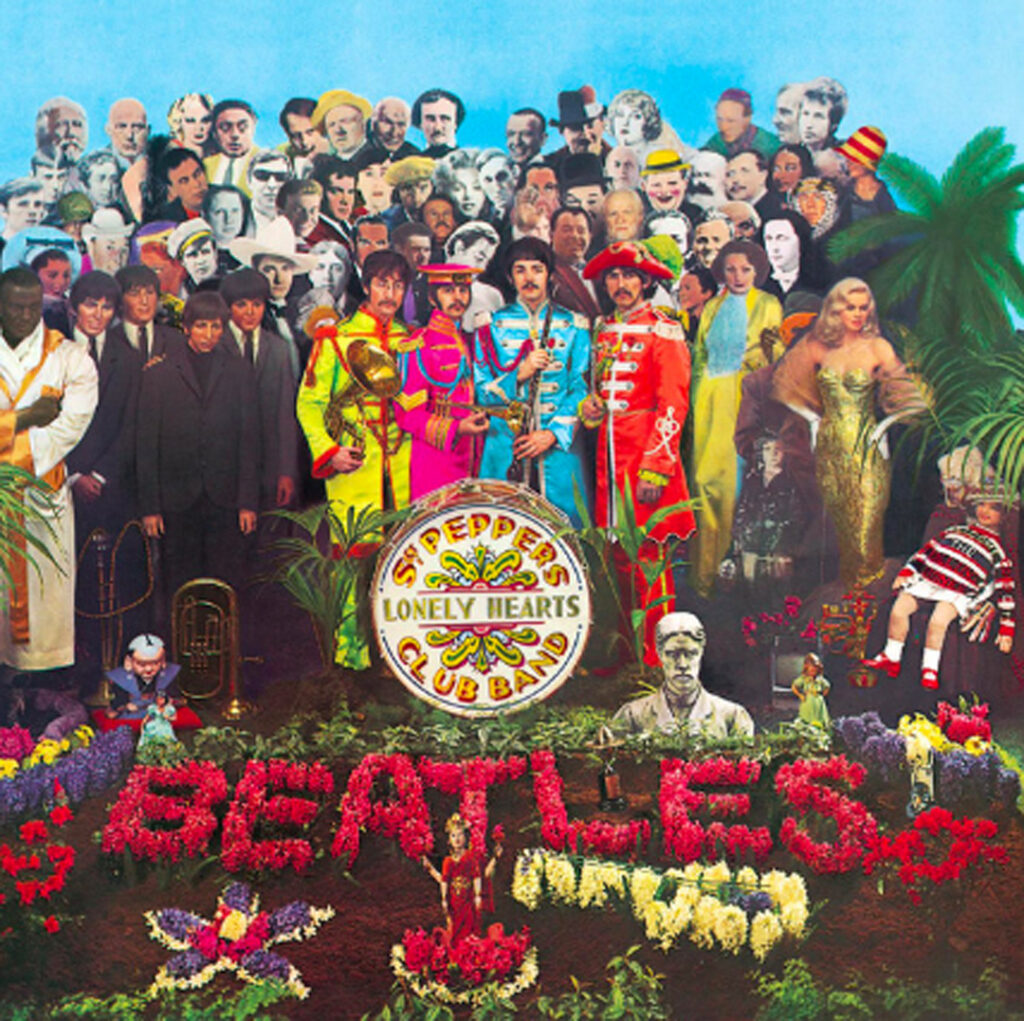
With the arrival of the psychedelic/experimental period and Indian music influence, the Beatles build complex-formed tracks defying classical labels. This approach clearly reflected developments in other genres like jazz, which a decade earlier had transitioned from simple AABA (or similar) or blues forms to fluid forms. Contemporary avant-garde music and continuous experimentation stimulated richer, more complex compositions. Standouts include “A Day in the Life” (1967), uniting two originally separate tracks (one Lennon, one McCartney) bound by visionary orchestration, and “Happiness Is a Warm Gun” (1968), composed of three distinct sections (the last a satire of 1950s R&B), each with distinct tempo, style, and mood—almost a mini-suite. Despite this, a good portion of production in the second phase remains anchored to simple African American-derived forms (as noted for original blues forms like “Yer Blues,” “For You Blue,” and “Why Don’t We Do It in the Road”).
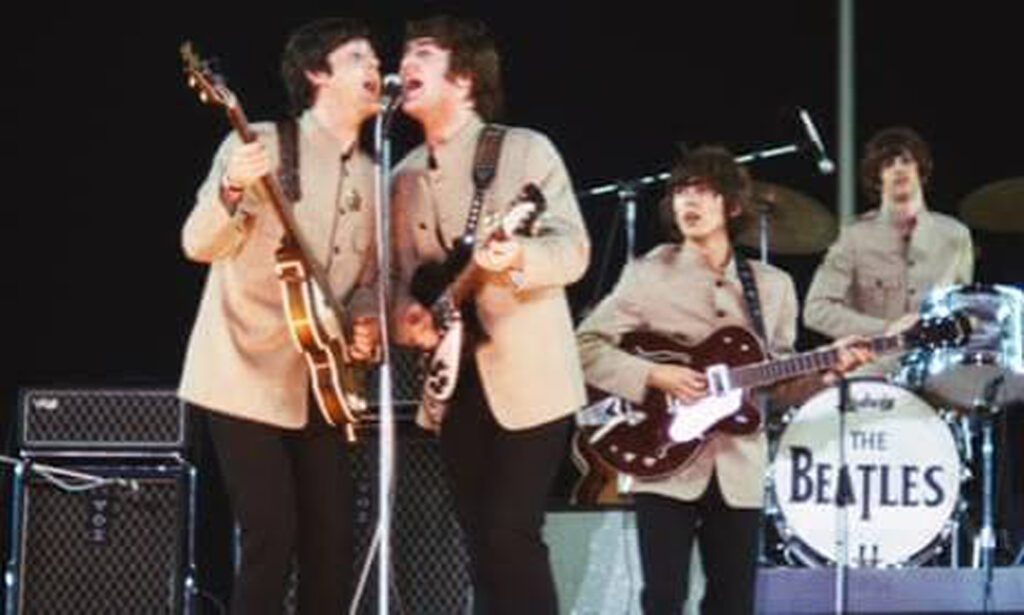
As jazz arranger Paolo Silvestri stated during a masterclass at the Canepa Conservatory in Sassari in 2025, concert setlists and album track orders also function as real formal architectures requiring arrangement and structuring. This inquiry thus extends to these two aspects. The Beatles, like any artist, had clear live setlist designs aimed at building a dramatic arc alternating energy and lyricism, rock and roll, blues, and pop. A typical 1964 European tour setlist:
1) I Saw Her Standing There; 2) I Want to Hold Your Hand; 3) All My Loving; 4) She Loves You; 5) Till There Was You; 6) Roll Over Beethoven; 7) Can’t Buy Me Love; 8) This Boy; 9) Twist and Shout; 10) Long Tall Sally
Observe the powerful opening with four originals (two chart-toppers: “I Want to Hold Your Hand” and “She Loves You”), a lyrical breathing point with cover “Till There Was You,” renewed energy with two high-tempo tracks, a calmer penultimate track (“This Boy”), closing with the repertoire’s two most explosive covers (“Twist and Shout” and “Long Tall Sally”). This mirrors a jazz set format, where rarely more than two ballads are performed, spaced apart within the set.
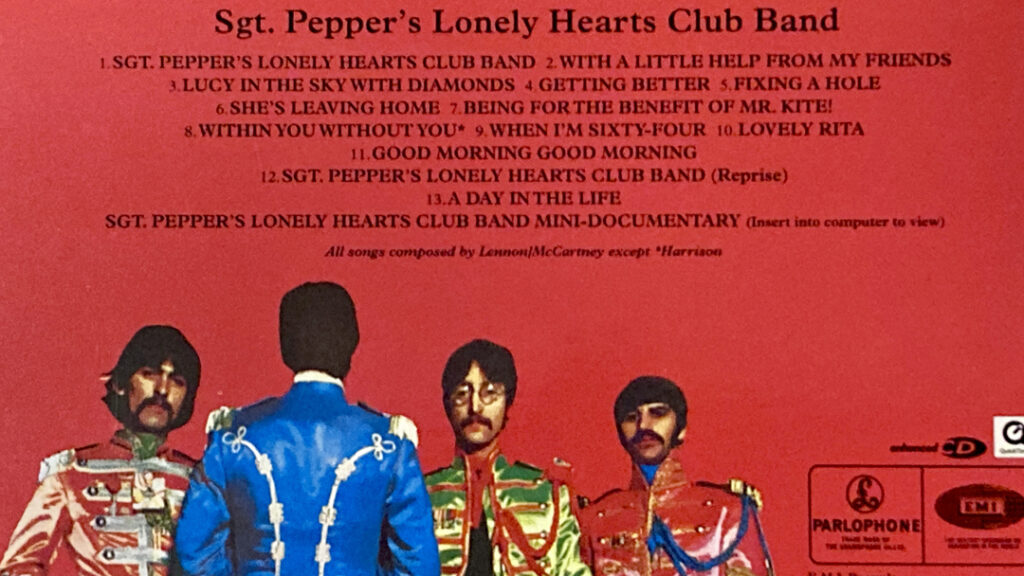
An underexplored yet fundamental aspect is album track placement, assuming a formal function within each individual group work, often crafting a sonic/temmatic narrative arc from first note to last. Rubber Soul is an early example of a record conceived as a formal unit rather than a sum of singles, as is Revolver. Yet with Sgt. Pepper’s Lonely Hearts Club Band the Beatles push this further: tracks not only follow sequentially, they interact emotionally and harmonically through the lonely hearts club saga, fictional singer Billy Shears (Ringo’s voice) seeking bandmate help, taking Lucy’s imaginative flight and all characters within, passing through India and Mr. Kite’s circus tent, to the band’s return and “A Day in the Life”‘s epic close. Even The Beatles (the “White Album”), superficially their most heterogeneous work, is the logical journey (guided by George Martin’s skilled hand) through individualities and styles shaping them up to that point.
Conclusions
To conclude this work, I suggest a personal interpretive hypothesis: the entire official Beatles discography can be read as an evolving form, akin to a modern multi-movement symphony. Not merely internal stylistic evolution, but progressive absorption and transformation of external influences—foremost African American traditions, as demonstrated here. From early phases, the Beatles proved deeply indebted to US black music, acting as an implicit yet constant thread across their output.
Revisiting the division into two major discographical “movements” separated by transitional album Rubber Soul, slightly expanding the latter’s margins to its predecessor (Help!) and successor (Revolver), I offer a tripartite formal interpretation of official Beatles discography, not in contrast with, but out of sync with Ian MacDonald’s interpretation:
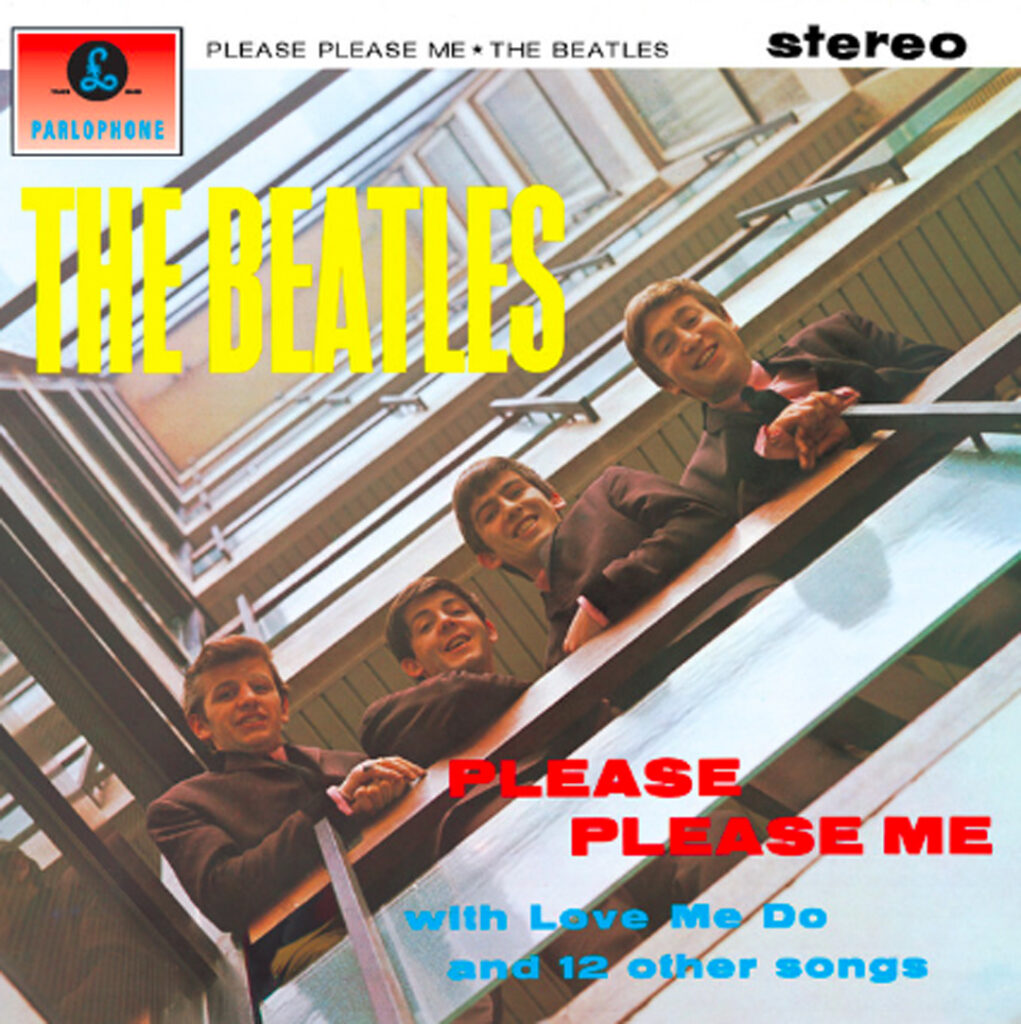
First movement, exposition (1963–1964): simple, direct, functional forms inspired by rock and roll, R&B, and doo-wop models. Tracks like “Twist and Shout” or “Please Mr. Postman” reinterpret black music industry hits, with originals reflecting those rhythmic/harmonic structures. Here the African American link is most explicit—the primary energy source.
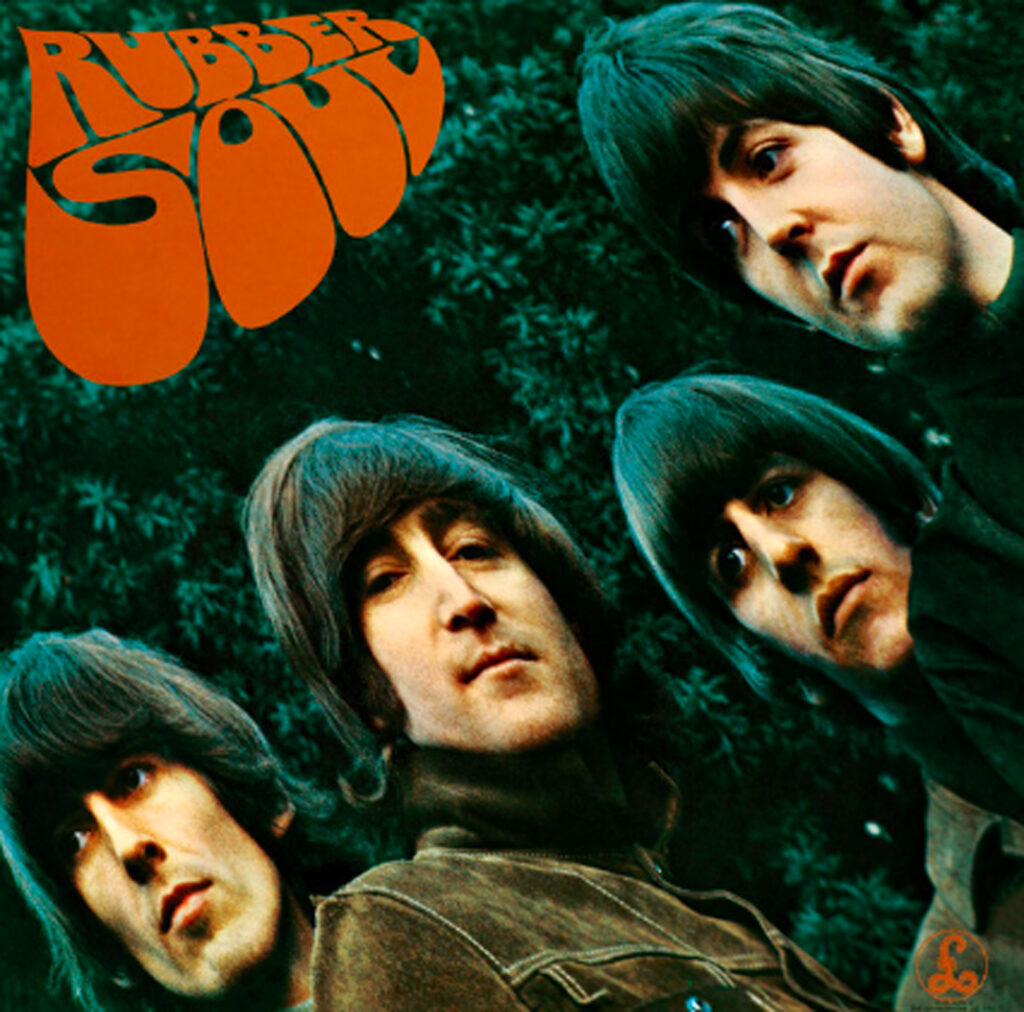
Second movement, development (1965–1967): Beatles language expands formally, timbrically, harmonically. African American influences internalize, sophisticated: soul horns in “Got to Get You Into My Life,” swing inflection in “Michelle,” groove/vocal articulations in “Drive My Car” owing much to Detroit funk/soul. Hybrid/unusual forms incorporate traditional jazz, modal jazz, Indian music.
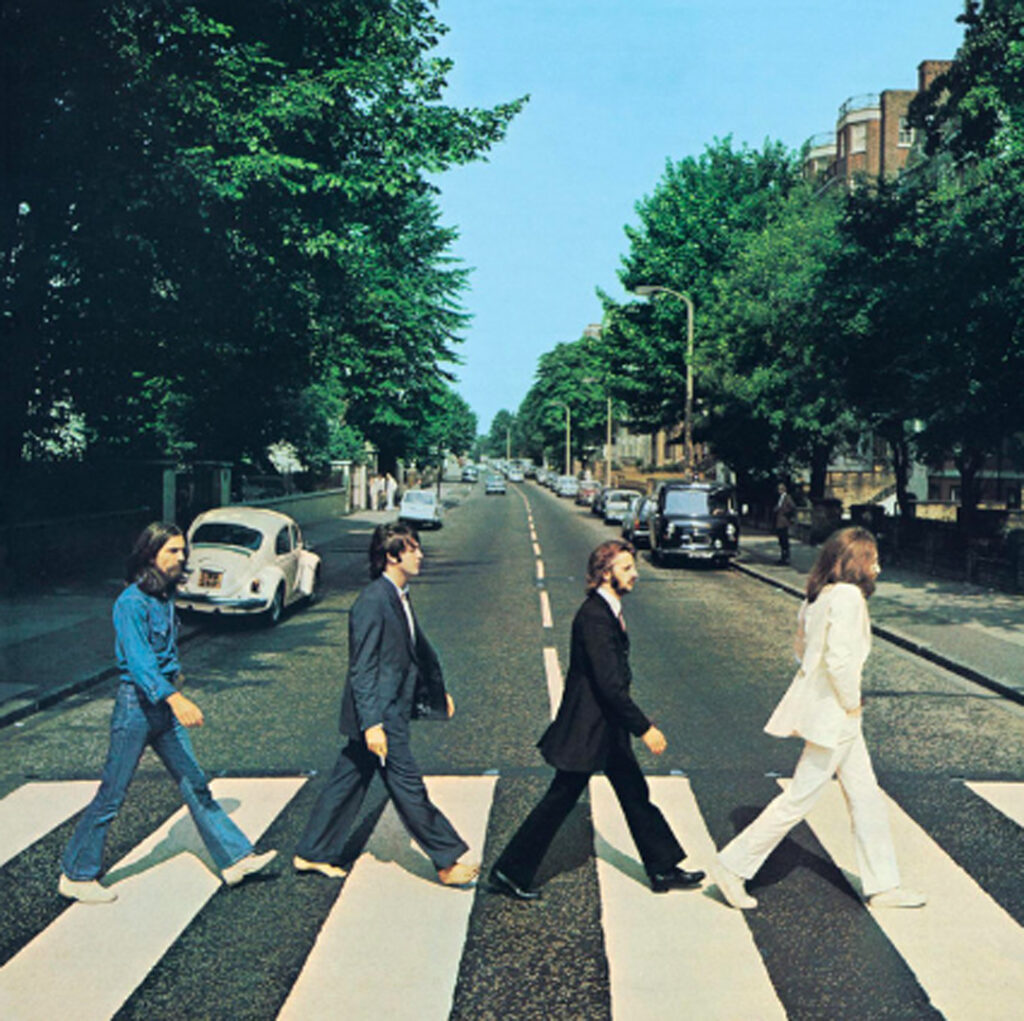
Third and final movement, recapitulation (1968–1970): fusion point between early influences and new directions. The group integrates prior stimuli into a personal, stratified, mature language. Soul, gospel, jazz, reggae are not merely cited, creatively reworked. African American interest manifests in details: groove in “Why Don’t We Do It in the Road,” Fats Domino sound on “Lady Madonna,” rétro jazz on “Honey Pie,” funk horns on “Savoy Truffle.”
In this sense, the Beatles formal evolution is inseparable from ongoing dialogue with African American tradition. Is Beatles music jazz? Almost certainly not. Does it matter? Almost not at all. Beatles music is a two-way dialogue with countless blues, soul, R&N/R&B, jazz, funk, doo-wop artists who inspired them and reinterpreted them in turn (notably compilation Motown Meets The Beatles (1995) and Brad Mehldau’s Your Mother Should Know: Brad Mehldau Plays The Beatles (2023)).
The Beatles discography is not just a British pop masterwork, a true multicultural symphony where black American roots play an essential role in defining stylistic/sonic identity.
Discography
Beatles
- Live! at the Star-Club in Hamburg, Germany 1962, 1977, Lingasong Records
- Please Please Me, 1963, Parlophone
- With the Beatles, 1963, Parlophone
- A Hard Day’s Night, 1964, Parlophone
- Beatles for Sale, 1964, Parlophone
- Help!, 1965, Parlophone
- Rubber Soul, 1965, Parlophone
- Revolver, 1966, Parlophone
- Sgt. Pepper’s Lonely Hearts Club Band, 1967, Parlophone
- Magical Mystery Tour, 1967, Parlophone (LP UK pub. 1976)
- The Beatles (White Album), 1968, Apple Records
- Yellow Submarine, 1969, Apple Records
- Abbey Road, 1969, Apple Records
- Let It Be, 1970, Apple Records
- Anthology 1, 1995, Apple Records
- Anthology 2, 1996, Apple Records
- Anthology 3, 1996, Apple Records
- Love, 2006, Apple Records / EMI
- Now and Then (single), 2023, Apple Records
Soloists
- Unfinished Music No.1: Two Virgins, 1968, Apple Records (John Lennon & Yoko Ono)
- Unfinished Music No.2: Life with the Lions, 1969, Zapple (John Lennon & Yoko Ono)
- Sentimental Journey, 1970, Apple Records (Ringo Starr)
- Rock ’n’ Roll, 1975, Apple Records (John Lennon)
- Cloud Nine, 1987, Dark Horse Records (George Harrison)
- CHOBA B CCCP, 1988, Melodiya / 1991, Parlophone (Paul McCartney)
- Run Devil Run, 1999, Parlophone (Paul McCartney)
- Kisses on the Bottom, 2012, Hear Music (Paul McCartney)
Others
- Motown Meets The Beatles, 1995, Motown Records (AA.VV.)
- All We Are Saying…, 2011, Savoy Jazz (Bill Frisell)
- Your Mother Should Know: Brad Mehldau Plays The Beatles, 2023, Nonesuch Records (Brad Mehldau)
Official Videography
- The Beatles Anthology, 1995, Apple Corps / EMI / Capitol
- The Beatles: Get Back, 2021, Walt Disney Studios / Apple Corps / WingNut Films
YouTube
- Greg Bissonette su Ringo Starr: [https://www.youtube.com/watch?v=jjKPbdTPswc](https://www.youtube.com/watch?v=jjKPbdTPswc)
- Beatles all’Ed Sullivan Show: [https://www.youtube.com/watch?v=jenWdylTtzs](https://www.youtube.com/watch?v=jenWdylTtzs)
Bibliography
- Assante, Marco – Castaldo, Gino. Blues, jazz, rock, pop. Torino: Einaudi, 2013.
- Coleman, Ray. John Lennon: La biografia. Milano: Arcana, 1993.
- Gioia, Ted. The History of Jazz. New York: Oxford University Press, 1997.
- Harrison, George. I, Me, Mine. London: Genesis Publications, 1980.
- Lewisohn, Mark. The Complete Beatles Recording Sessions. London: Hamlyn, 1988.
- MacDonald, Ian. Revolution in the Head. Milano: Il Saggiatore, 2006.
- McCartney, Paul – Miles, Barry. Paul McCartney. Many Years From Now. Milano: Rizzoli, 1998.
- Merlin, Enrico. 1000 dischi per un secolo. Milano: Rizzoli, 2022.
- Quantick, David. Revolution. La storia del White Album dei Beatles. Milano: Arcana, 2016.
- Spitz, Bob. The Beatles: La vera storia. Milano: Sperling & Kupfer, 2005.
- The Beatles. The Beatles: Complete Scores. Milwaukee: Hal Leonard Corporation, 1993.
- Wills, Geoff. Frank Zappa e la musica jazz. Milano: Arcana, 2015.
Internet
- Beatles and Jazz – Beatles Story: [https://www.beatlesstory.com/blog/the-beatles-and-jazz/](https://www.beatlesstory.com/blog/the-beatles-and-jazz/)
- All About Jazz – Beatles Influence: [https://www.allaboutjazz.com/how-jazz-may-have-influenced-the-beatles-the-beatles-by-aaj-staff](https://www.allaboutjazz.com/how-jazz-may-have-influenced-the-beatles-the-beatles-by-aaj-staff)
- Jazz Convention – Beatles & Jazz: [https://www.jazzconvention.net/2013/09/04/beatles-a-jazz/](https://www.jazzconvention.net/2013/09/04/beatles-a-jazz/)
- Far Out Magazine – John Lennon and Jazz: [https://faroutmagazine.co.uk/did-john-lennon-really-hate-jazz/](https://faroutmagazine.co.uk/did-john-lennon-really-hate-jazz/)